What do cultural heritage sites mean for contemporary China and the world?
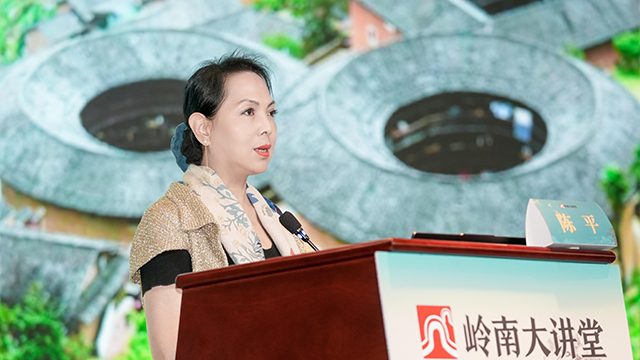
On May 30, 2026, Professor Chen Ping, Chair of the UNESCO Chair for the Inheritance and Innovation of Traditional Handicrafts Worldwide, and Director of the Institute for Cultural Heritage and Creative Industries at Jinan University, was invited to the Lingnan Lecture Hall. She titled Leveraging Cultural Heritage to Tell Compelling Chinese Stories at the Guangdong Museum in Guangdong Province, China. During the event, she had in-depth discussions with the audience on the classification and core concepts of world heritage, and shared her decades of field research, global experience and insights into academic practice.
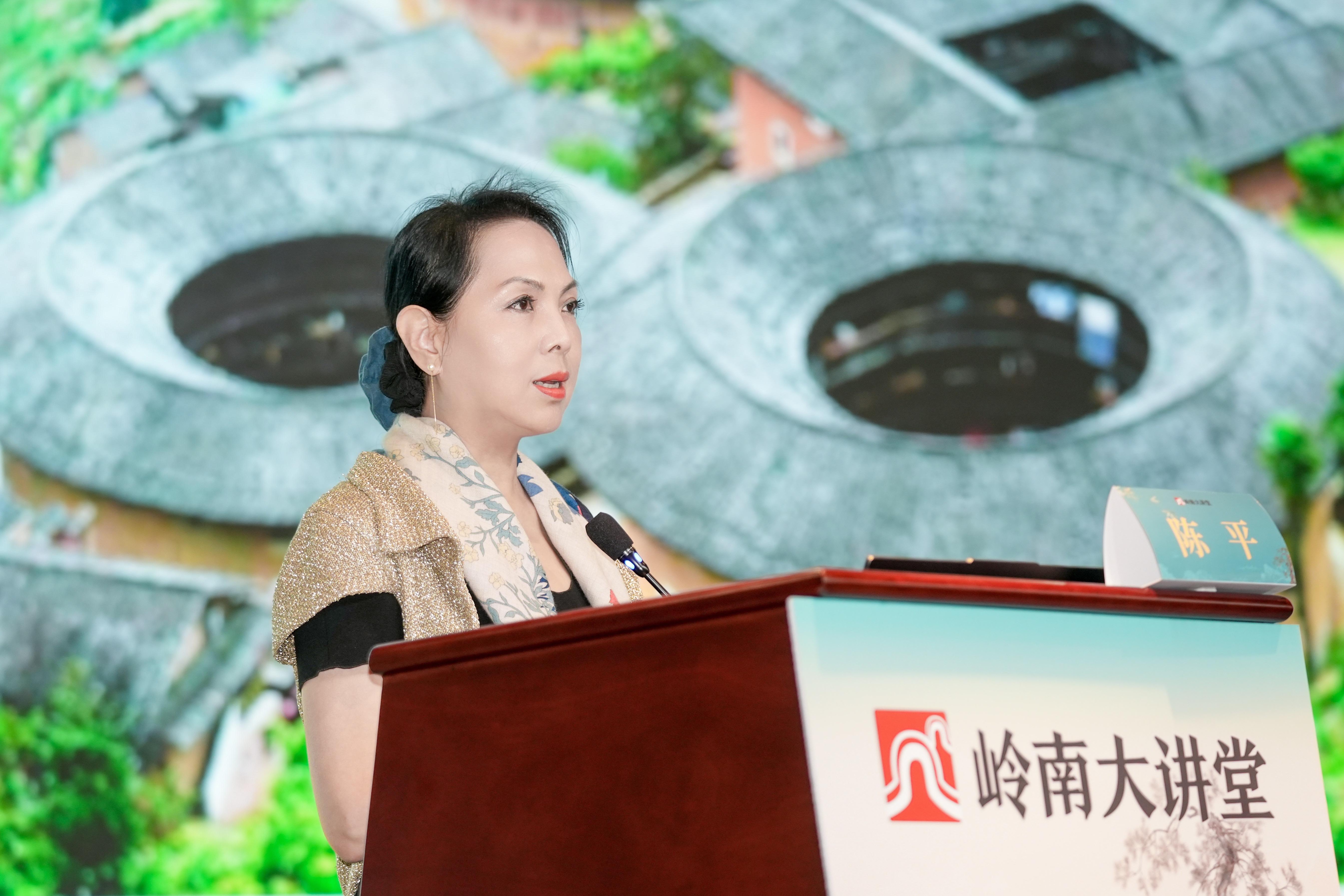
Professor Chen Ping gave the lecture
Professor Chen Ping remarked: "The best way to present Chinese cultural heritage is to share stories about an old friend. The true value of Chinese cultural heritage lies not in being an 'Oriental wonder', but in offering humanity an alternative way of life — one that emphasizes process, interpersonal bonds and artistic conception."
The Power of Cultural Heritage and Chinese Stories
The recent hit film Love Letter to Grandma has drawn widespread public attention in China. Opening her lecture with comments on the movie, Professor Chen noted: "This production features no big-budget scenes or A-list actors, yet it quickly gained popularity purely through the creators’ genuine emotions. What touches audiences most is its humanistic portrayal of overseas Chinese striving for a living abroad." She stressed that the film is not just a touching story, but also a vivid record of history. Notably, the Qiaopi Archives: Overseas Chinese Remittance Letters were inscribed on the Memory of the World Register in 2013, serving as a vital carrier of collective memories for overseas Chinese communities.
Cultural heritage is more than relics of the past. It is a crucial medium for fostering social identity, promoting cultural exchanges and international communication. It carries the legacy of bygone eras while shaping the present and future, standing as a repository of national historical memory and the cornerstone of a country’s cultural identity. As defined by UNESCO and the World Heritage Committee, world heritage falls into three main categories: World Cultural Heritage, World Natural Heritage, and Mixed World Cultural and Natural Heritage. Cultural landscapes, a special category established by UNESCO, are generally classified under cultural heritage.
Mount Tai in China serves as a typical example. Boasting profound historical and cultural roots closely linked to Confucianism, imperial fengshan rituals and numerous literary and artistic works, it also features unique natural scenery and geological value. For these reasons, it meets the criteria for mixed heritage and is listed as a World Cultural and Natural Heritage site. Professor Chen used a vivid metaphor: World heritage is a precious legacy left by "two elders". One is "Mother Nature", who created mountains, rivers and lakes, representing natural heritage. The other is "our ancestors", who built architectures, crafted cultural relics and passed down traditional skills, representing cultural heritage. Sites with both outstanding values qualify as mixed heritage, such as Mount Tai, Huangshan Mountain, Mount Emei and Wuyi Mountain in China.
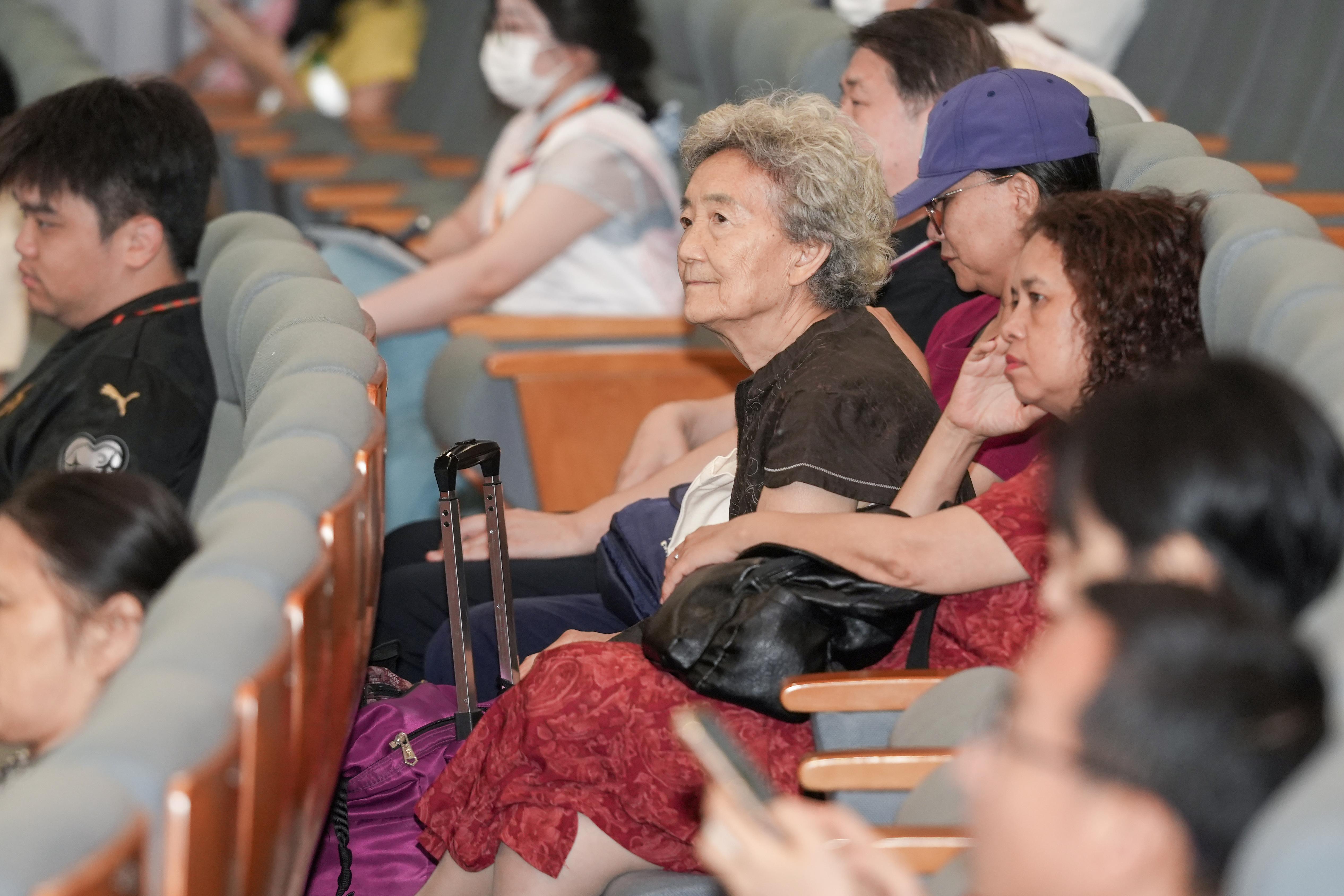
The audience listened attentively to Chen Ping's lecture
Intangible cultural heritage is equally important. Professor Chen pointed out that intangible cultural heritage refers to traditional cultural expressions and spaces passed down through generations across the globe, which are deeply integrated into people’s daily lives. It bears witness to historical development, constitutes valuable cultural resources, and forms an integral part of Chinese civilization. "Intangible cultural heritage is not a physical object," she emphasized. "It is a living, flowing and inheritable culture. We aim to keep it alive today. While preserving its historical value, we will promote its inheritance, innovation and evolution, so that it stays closely connected with modern life."
The Core of Telling Excellent Chinese Stories
China abounds with tangible and intangible cultural heritage, including the Yungang Grottoes, the Leshan Giant Buddha, paper-cutting and embroidery. How can we draw on these resources to tell wonderful Chinese stories? According to Professor Chen, the key lies not in literal language translation, but in cultural adaptation; not in grand preaching, but in striking emotional chords and resonance.
To tell Chinese stories well, one must first understand the connotations of Chinese and Western cultures. For instance, Snow-Covered Mountains and Passes by Wen Zhengming of the Ming Dynasty embodies the traditional Chinese painting techniques of scattered perspective and artistic blank space. The idiom "mandarin ducks playing in water" should never be literally translated as "two ducks". Instead, it can be interpreted as "Chinese love birds, a symbol of unwavering fidelity", echoing the image of swans in Western culture. The legend of The Butterfly Lovers can be elevated to the universal theme that "love transcends death". The Spring Festival is far more than setting off firecrackers and eating dumplings; it represents collective ritual traditions and annual spiritual comfort for the Chinese people.
In terms of communication approaches, Professor Chen warned against four common pitfalls: over-academization, static presentation, excessive localization and monotonous expression. She proposed a development model of "taking heritage as the core and creativity as the wing". By integrating cultural heritage into modern creative design and realizing its modern transformation through creative industries, cultural elements can be turned into tangible, accessible and practical products and artworks. The game Black Myth: Wukong, which has sparked overseas audiences’ interest in cultural relics of Shanxi Province, is a prime example of culture empowering creativity and creativity enabling cultural influence to spread worldwide.
At the end of the lecture, Professor Chen concluded for all cultural communicators: "We need to figure out how to share our fine traditional culture with the world. We should tell Chinese stories to future generations and foreign friends in a way that is engaging, elegant and easy to understand. We can stay modest without being humble, and confident without being arrogant. Take steady steps and never seek instant success."
The lecture was met with enthusiastic responses from the audience. Ms. Li, a data analyst, shared: "I was most fascinated by the professional knowledge about world cultural heritage today. I could never distinguish between tangible and intangible cultural heritage before, and I have learned a great deal." A student majoring in Tourism Management at South China University of Technology commented: "China is endowed with rich cultural resources, just like raw materials. We need to process and present them in diverse ways, allowing Chinese culture to shine uniquely on the global stage."