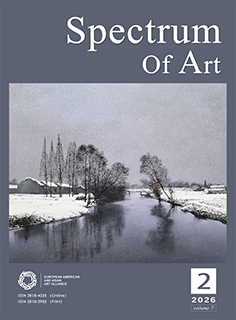
The works of the renowned painter Liang Yu are once again on display at the National Art Museum of China


After the publication of "The Jeffrey Cook House - Pioneering Sustainable Architecture" (ISBN: 979-8-218-07970-3) written by Klaus Dunker, a Principal of Dunker Associates, Architects, and retired Associated Professor Emeritus of the University of Toronto, it was well-received by readers in the architectural industry and also highly praised by the general public. This book was published by the Trustees of the Jeffery Cook Charitable Trust in 2022.
My academic bond with American scholar Ronald G. Knapp originated from an international symposium on traditional Chinese dwellings held in 1991. This academic encounter fostered a decades-long profound friendship and continuous scholarly exchanges spanning over thirty years. At the International Symposium on Ronald G. Knapp’s Research of Chinese Traditional Dwellings hosted by the School of Architecture, Tsinghua University on 5 December, 2018, I delivered a speech systematically introducing his fruitful achievements and academic value in the research of traditional Chinese residential architecture.
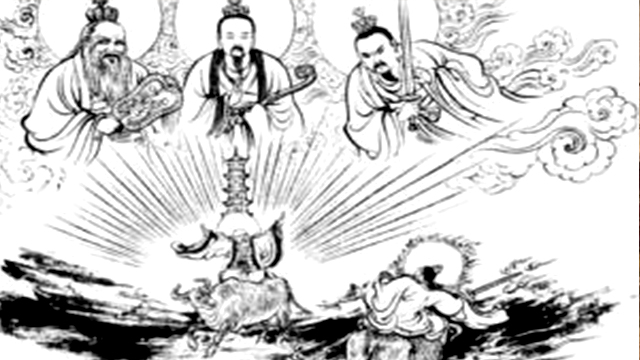
As China’s indigenous religion, Taoism’s core tenets of the Unity of Heaven and Humanity and Tao Emulates Nature, alongside its immortal worship system, have profoundly shaped the design and decorative art of traditional vernacular dwellings. Traditional residences stand as tangible carriers of Chinese traditional culture; their spatial layouts, structural configurations and ornamental motifs all embody people’s spiritual pursuits and cultural beliefs. Rooted deeply in Chinese civilization, Taoism evolved into a complete religious and symbolic system following its formal establishment in the Eastern Han Dynasty (25–220 AD). Imbued with auspicious connotations and cultural symbolism, Taoist decorative patterns are widely applied to wood, stone and brick carvings, window latticework, roof ridge ornaments, screen walls and other architectural components of folk houses, serving as a vital bridge connecting mundane life and religious faith.
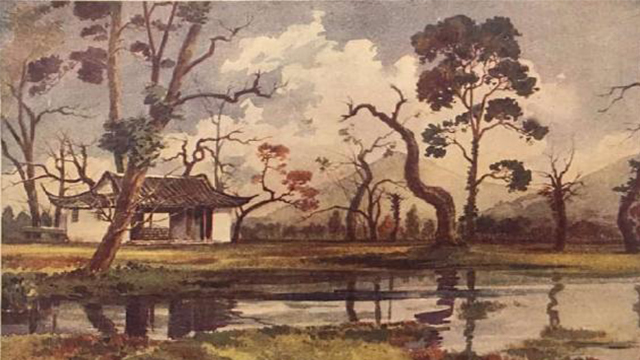
From 1880 to 1912, Liu Dezhai served as director of the Shanghai Tou-sè-wè Art Workshop for thirty-two years, leading it to its most brilliant period. An important educator of early Chinese watercolor, he left behind a body of work that was almost entirely lost or scattered. He inherited Western teaching methods, introduced Pierre Vignal’s watercolors, trained Xu Yongqing, and, through contacts with Shanghai-school painters, integrated Western sketching into traditional Chinese painting. Although his watercolors are lost, his contributions to Western art education and the dissemination of watercolor are significant. As a key figure in the rise of Chinese watercolor education, he left a pedagogical legacy and cross-cultural influence that had a lasting and profound impact on Chinese watercolor.
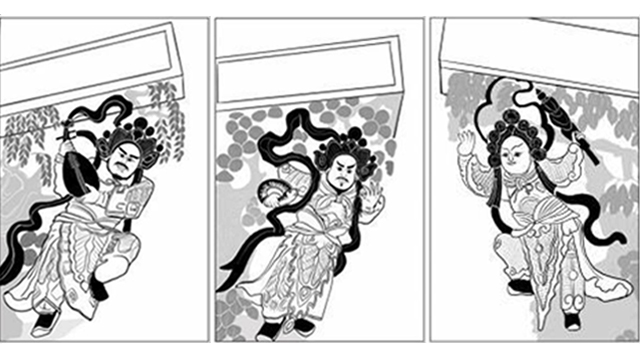
In the architectural tradition of Chinese folk dwellings, decorative patterns are not merely ornamental; they are a carrier of survival wisdom. They function as a bridge between the physical environment and the human psyche. Guided by a holistic view of the universe, ancient builders approached settlement design with an all-encompassing idealism. When confronted with spatial flaws—be it an improper orientation or a jagged mountain view—they did not resign themselves to fate. Instead, they activated a creative remedial mechanism. By arranging specific patterns in designated spaces, they utilized visual correction to achieve psychological balance. This tradition, deeply rooted in Feng Shui (the art of placement), represents a profound pursuit of security. It evolved into a codified system where decorative patterns were used to "cure" architectural defects, ensuring the prosperity of the family and the clan.
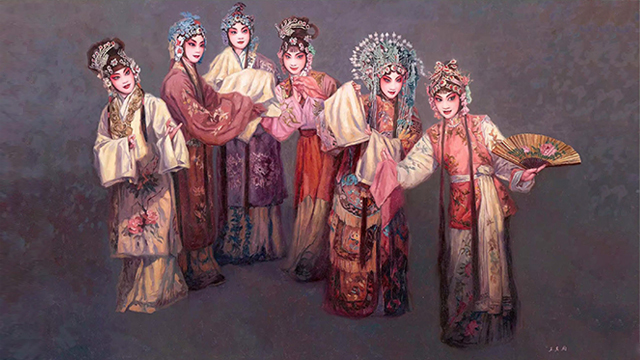
Beljing Opera interprels various spects of life through dynamicsinging, rectation,acting, and fighting: Oil painting expresses thoughts andenotions in the tran-uil form,color, ligh,and shadow.T he fwo diferent visalcultural systems of Peking Opera and oil paintingcondense he essenc ofBastern and Western aesthetliexhibition uses oil painting as a realistic"tool" toembody the subtle and elegant ' way of Peking Opera Dan roles, Themoment of conentraionhecanvahe Dow of aura on stage, and colors andlines generate new expressions in a new.contex, forming an artistic gazethat transcends culture.
Qijun Wang

Yehan Wang

Hong Chen