2026 WORLD NOMAD GAMES
Scholars from 28 Countries Discuss Nomadic Civilization
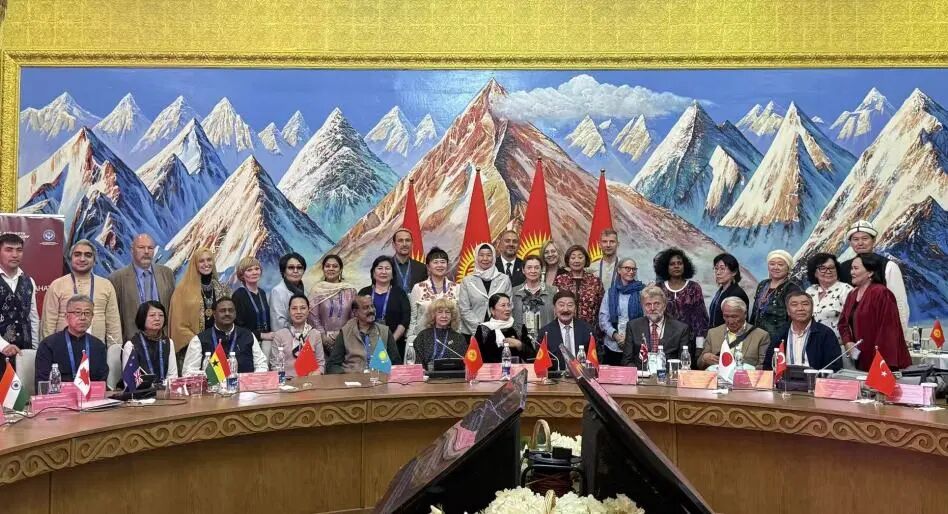
On September 3, 2026, the International Scientific and Practical Conference "Nomadic Civilization: Heritage, Paradigms and Prospects" was held in Issyk-Kul Region, Kyrgyz Republic, as part of the 6th World Nomad Games. Over 160 experts, scholars, and cultural representatives from 28 countries attended the conference, exchanging views on nomadic civilization research, cultural heritage preservation, traditional music and handicraft inheritance, and the development of traditional culture in contemporary society.
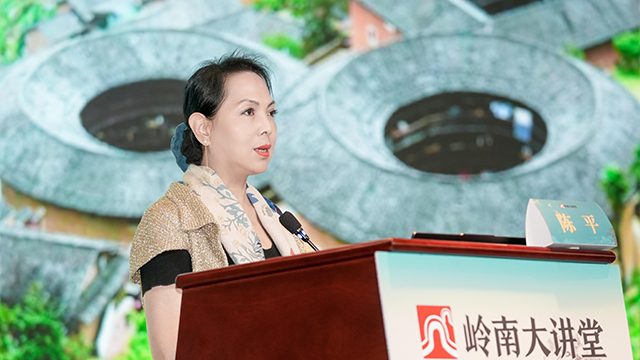
Professor Chen Ping, Global President of the International Organization of Folk Art (IOV), holder of the UNESCO Chair on the Transmission and Innovation of World Traditional Crafts, and Dean of the Institute of Cultural Heritage Creative Industries at Jinan University, was invited to attend and deliver a speech.
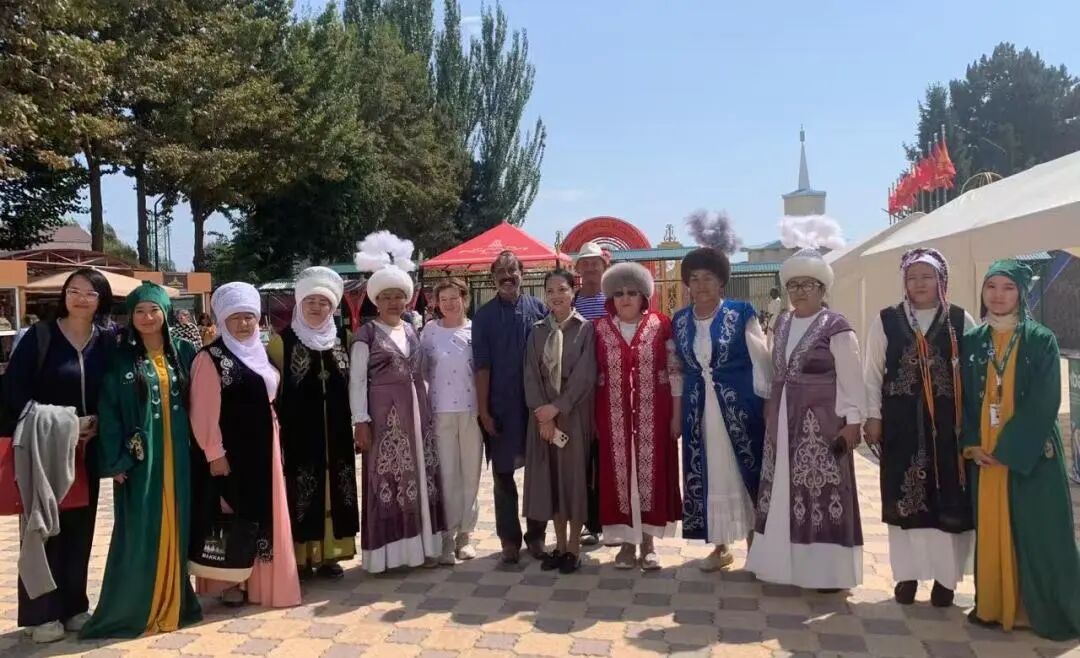
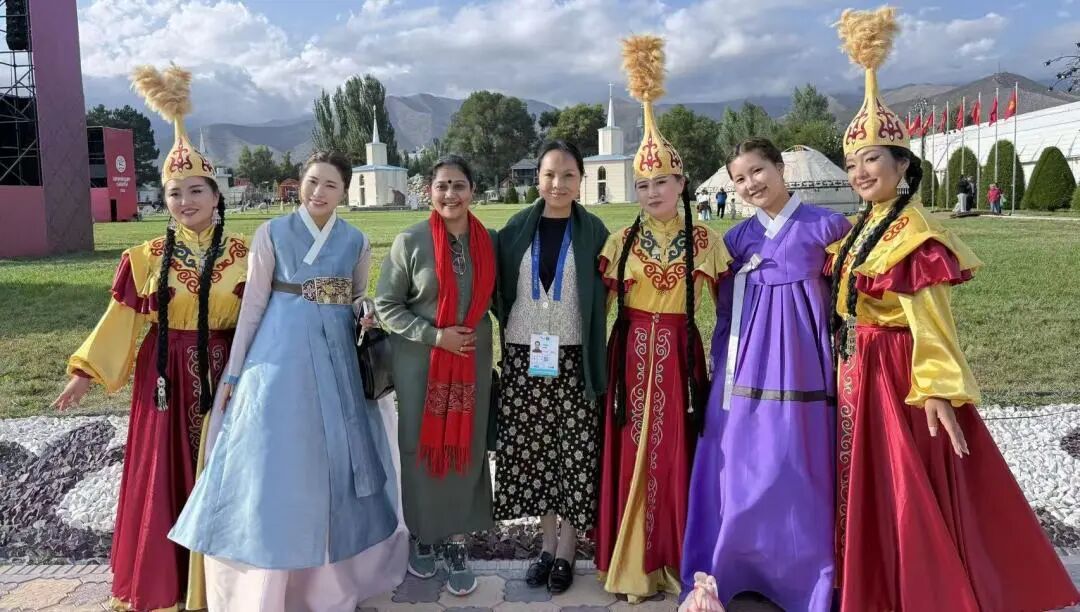
Over 160 experts, scholars, and cultural representatives from 28 countries attended the conference.
Scholars from 28 Countries Discuss Nomadic Civilization
This conference was an important academic event of the 6th World Nomad Games. The plenary session was held on the morning of September 3, followed by thematic discussions in the afternoon.
Arslan Koichiev, State Secretary of the Kyrgyz Republic; Sultan Raev, Secretary General of the International Organization of Turkic Culture (TÜRKSOY); Doxun Kim, Director of the International Information and Networking Centre for Intangible Cultural Heritage in the Asia-Pacific Region under the auspices of UNESCO (ICHCAP); and Aktoty Raimkulova, Chair of the Turkic Culture and Heritage Foundation, were among the attendees.
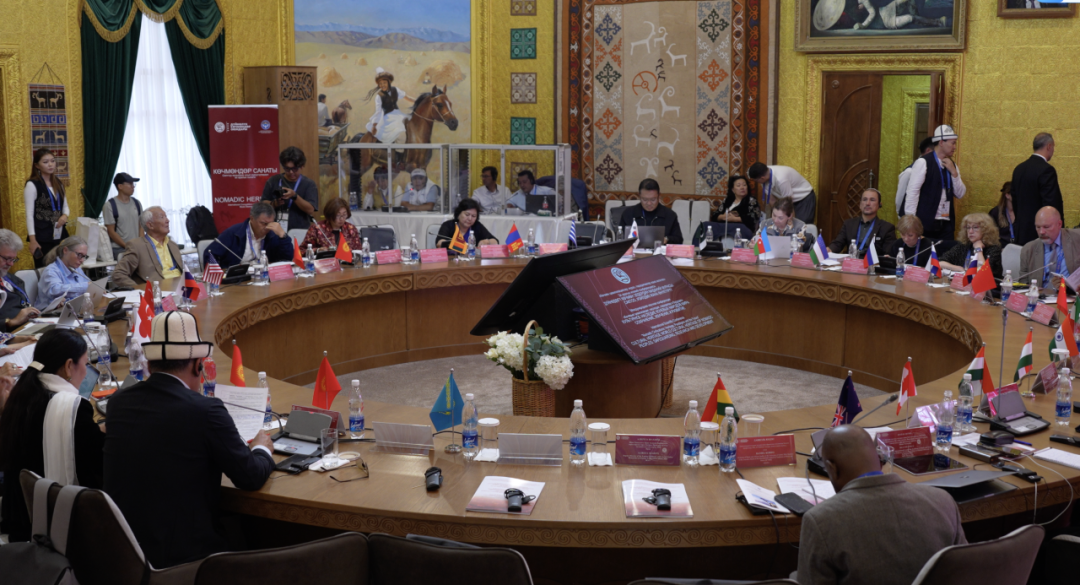
Scene of the International Scientific and Practical Conference of the 6th World Nomad Games
Representatives from universities, research institutions, and international cultural organizations across Central Asia and other regions of the world participated in the discussions. Scholars examined the historical value of nomadic civilization and its continuity and transformation in contemporary society from the perspectives of history, ethnology, music, dance, and cultural heritage.
The afternoon thematic session, "Cultural Heritage of World Nomads: Preservation, Research and Development," extended the discussion to living cultural heritage. Roza Amanova, lead organizer of the International Traditional Music Festival "Nomadic Heritage"; Svanibor Pettan, former President of the International Council for Traditional Music and Dance (ICTMD); and Brian Diettrich, Vice President of ICTMD, participated in the session. Scholars from China, Kyrgyzstan, Russia, the United Kingdom, New Zealand, Turkey, South Korea, India, and other countries exchanged views on traditional music, oral traditions, traditional handicrafts, cultural memory, and community-based transmission.
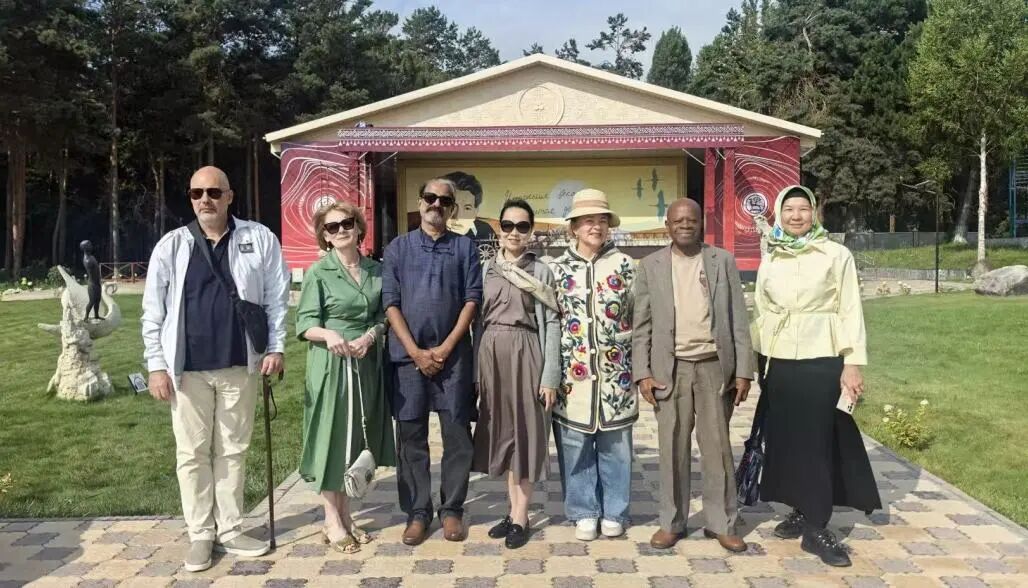
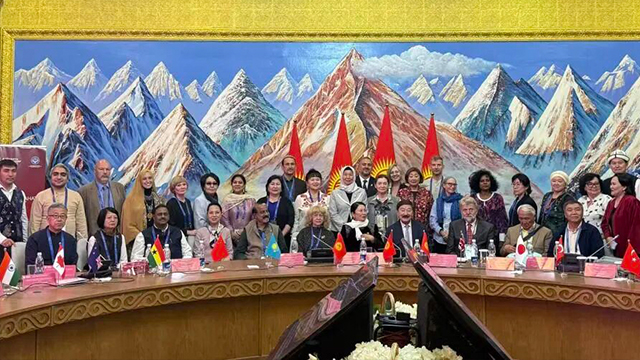
Group photo of some participants
Chen Ping: Tradition Gives Us Roots, Innovation Opens New Paths
In her speech, Chen Ping argued that nomadic civilization is not merely a cultural form confined to history. Today, in many countries and regions, it remains alive in people's daily lives. "Cultural heritage lives in the hands of artisans, the voices of singers, the stories of families, the skills of herders, and the memories of communities. It connects the past, the present, and the future."
She emphasized that preserving cultural heritage does not mean freezing tradition in the past. As social environments, modes of production, and the lives of young people change, cultural heritage preservation must also focus on the people of today—especially those who continue to create, practice, and transmit these cultures.
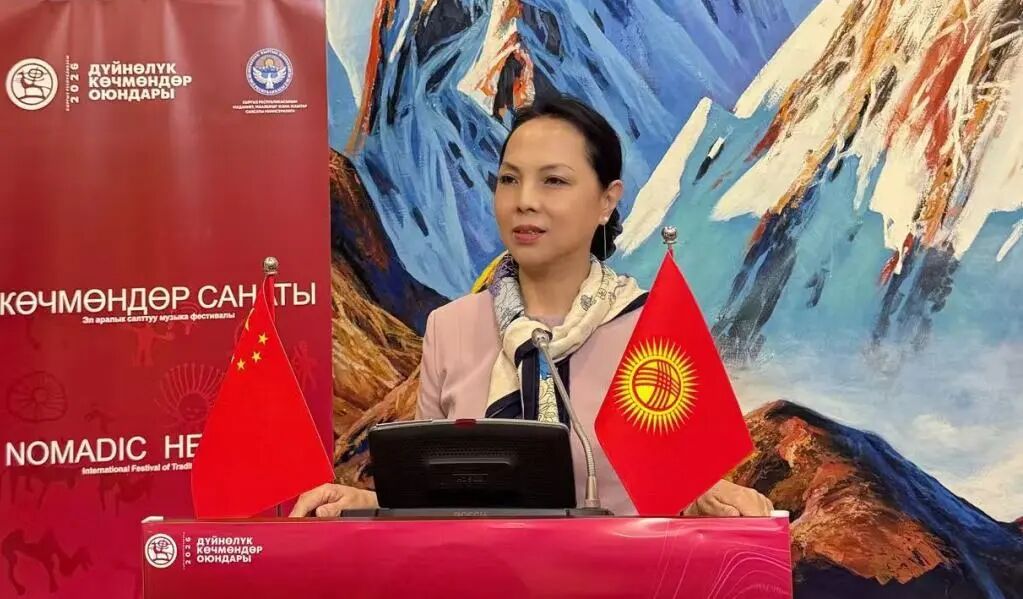
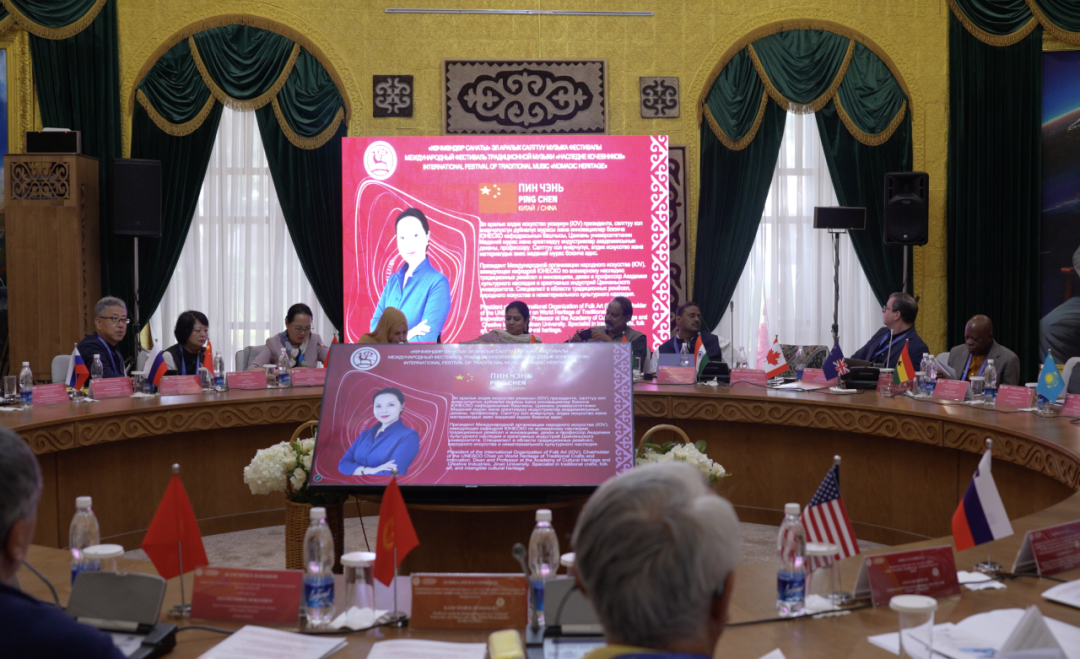
Chen Ping delivering a keynote speech at the academic conference
Drawing on IOV's longstanding work in international folk art and traditional cultural exchange, Chen Ping proposed three keywords: international cooperation, youth participation, and innovation. She noted that while different countries have distinct cultural traditions, they face many common challenges today: How can the younger generation understand tradition? How can traditional culture remain relevant in modern life? How can we embrace digital technology and artificial intelligence while respecting cultural origins and the rights of inheritors and communities?
"Tradition gives us roots, and innovation opens new paths for us," she said. IOV hopes to further connect cultural institutions, researchers, artists, traditional culture practitioners, and young people across countries, enabling different civilizations not only to showcase themselves to one another but also to genuinely understand and learn from each other through education, research, exchange, and community practice.
Young People Are Not Bystanders of Traditional Culture
When discussing youth participation, Chen Ping introduced the recent practices of the UNESCO Chair on the Transmission and Innovation of World Traditional Crafts. She believes that youth participation in cultural heritage preservation should not be limited to learning a traditional craft; more importantly, young people should enter the living contexts where culture takes place, understanding the lifestyles, local knowledge, community relationships, and values behind the crafts.
The Chair's "Creative 100" Youth Creative Design Talent Training Program has, over the years, organized young people to enter villages, communities, and traditional handicraft sites. Through field research, collaborative learning with inheritors, creative design, and interdisciplinary practice, participants gain a renewed understanding of traditional culture.
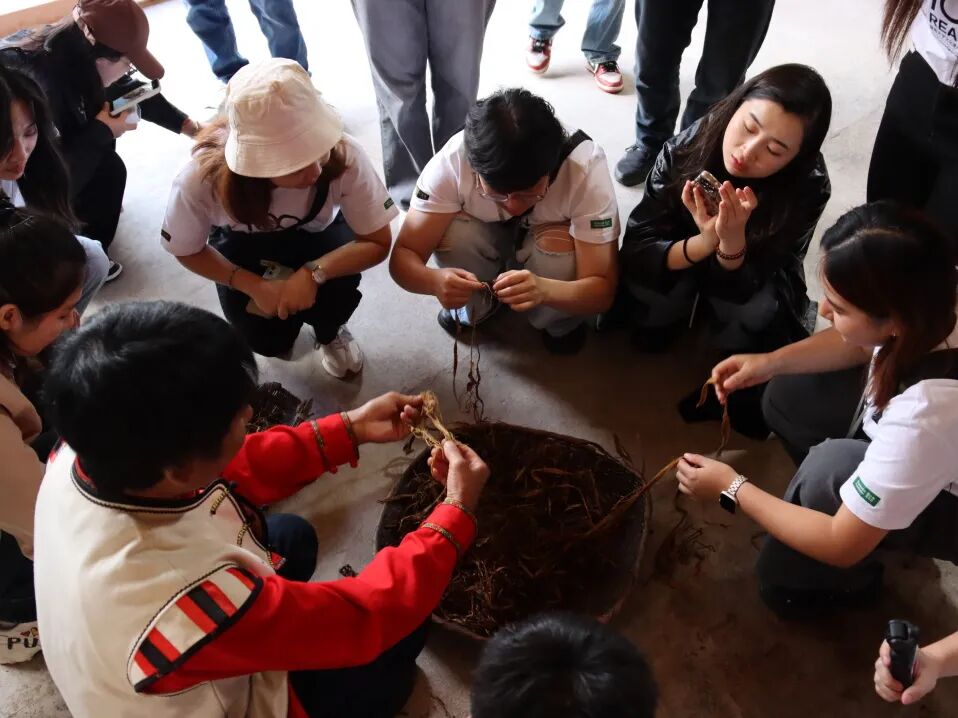
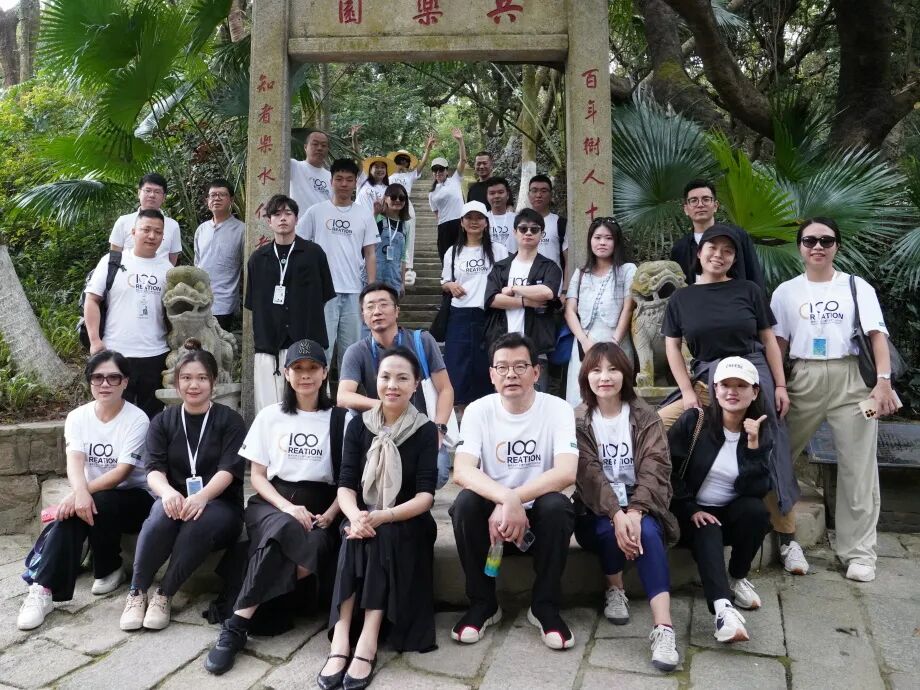
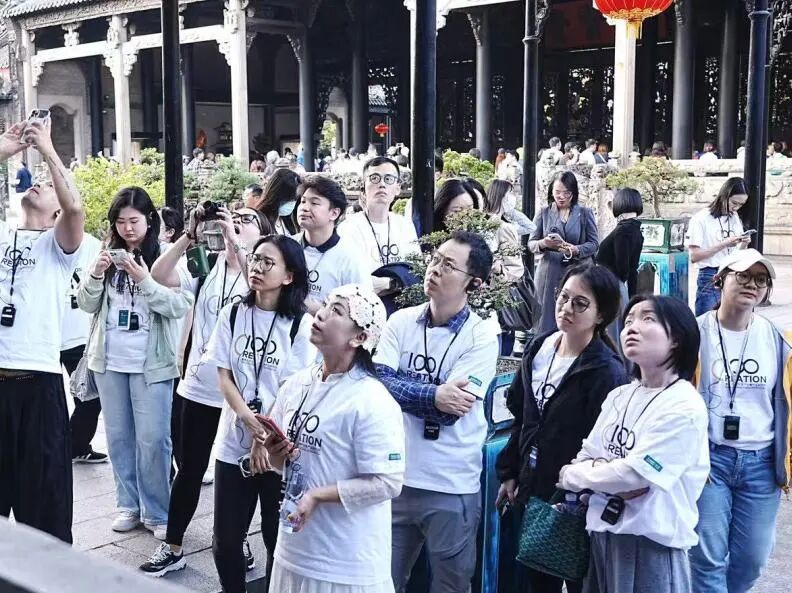
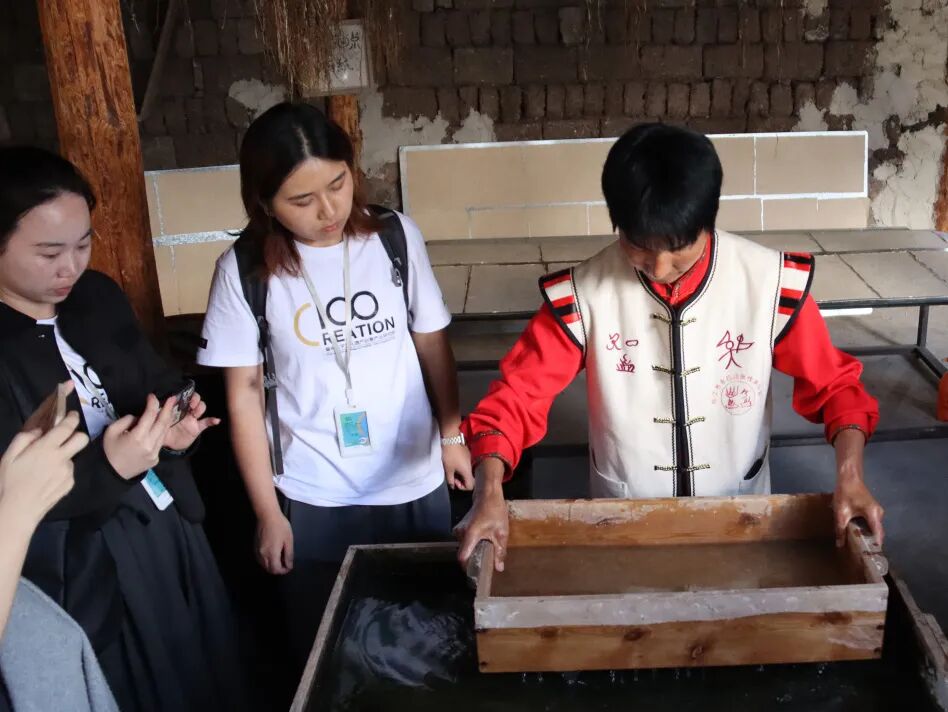
"Creative 100" youth conducting field research or exchanging with traditional handicraft inheritors
A paper on youth capacity-building and the sustainable development of traditional handicrafts was also submitted to the conference. Based on the Chair's practices, the paper discusses how young people can move from cultural understanding and field learning to creative practice, and further examines new issues arising from the introduction of digital technology and artificial intelligence into traditional culture, including cultural origins, usage permissions, and the rights of inheritors and communities.
A Folding Lamp That Brings Tradition into Today's Life
During her speech, Chen Ping displayed a folding lamp designed by a "Creative 100" participant: a national treasure-class classical painting, reimagined through modern creative design, transformed into an affordable everyday object accessible to all. The elegant artistic conception of the painting brings warmth and light to the user; lightweight and practical, the lamp exemplifies the integration of traditional cultural elements with contemporary creative design.
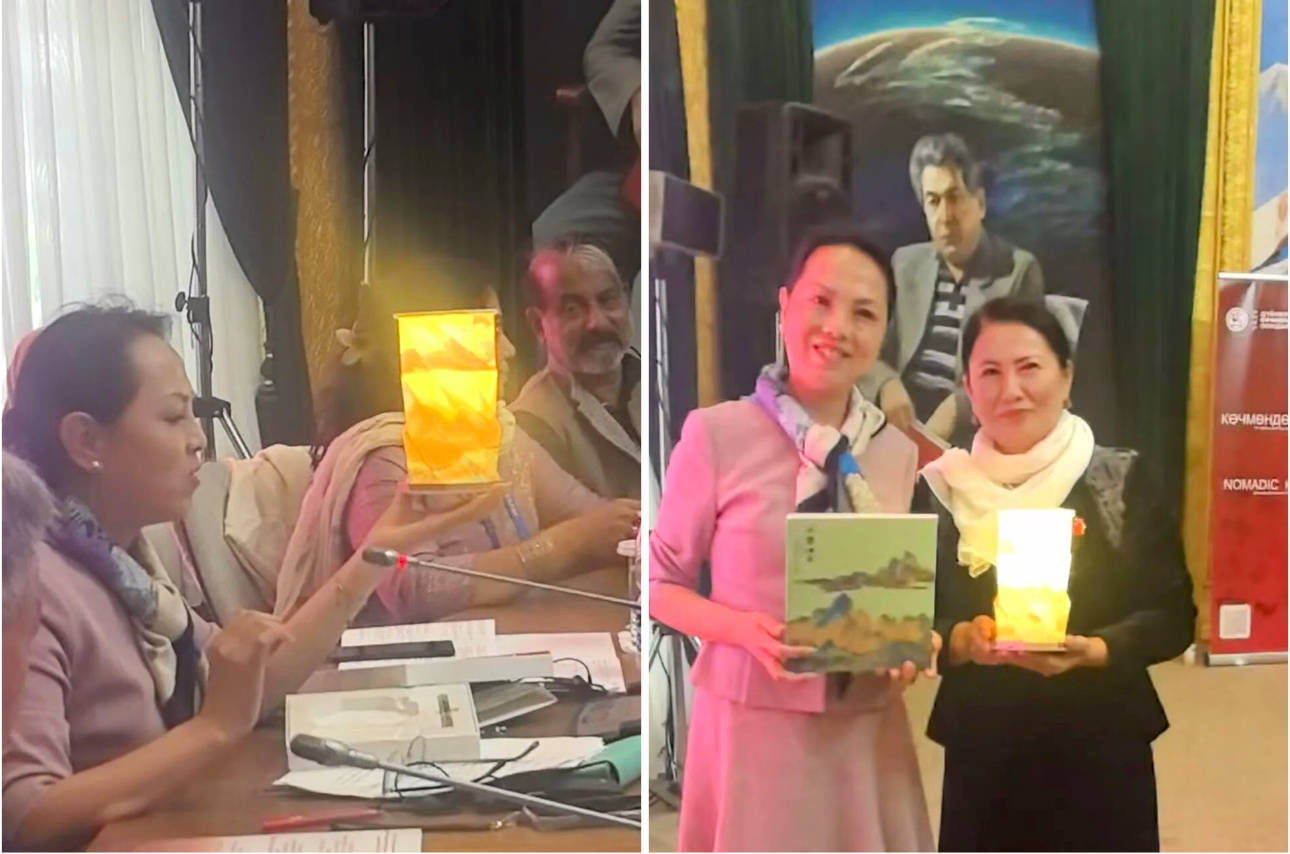
Left: Displaying the "A Thousand Miles of Rivers and Mountains" folding lamp at the event
Right: Presenting the "A Thousand Miles of Rivers and Mountains" folding lamp to Professor Roza Amanova, Director of the Research Center for Traditional Culture and Art at the National Academy of Sciences of the Kyrgyz Republic
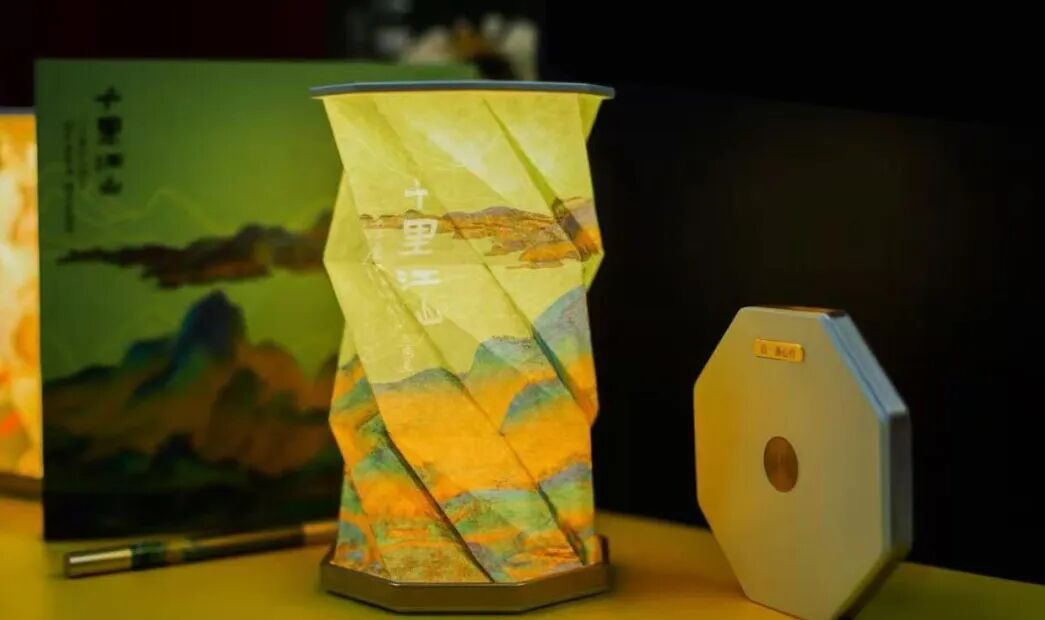
The "A Thousand Miles of Rivers and Mountains" folding lamp perfectly integrates Chinese traditional culture with contemporary creativity.
This simple object illustrated her understanding of "inheritance and innovation": the contemporary transmission of traditional culture is not merely about preserving the past, but also about finding new ways for it to reconnect with today's life. She then presented the folding lamp to Roza Amanova, lead organizer of the International Traditional Music Festival "Nomadic Heritage." The two scholars, both long engaged in traditional culture research and practice, subsequently began a conversation about traditional music, traditional handicrafts, and future collaboration.
From Chinese traditional handicrafts to Kyrgyz traditional music, from the life memories of nomadic peoples to the digital era faced by the younger generation, cultural practices from different countries and fields converged in a single space of discussion on the shores of Issyk-Kul.
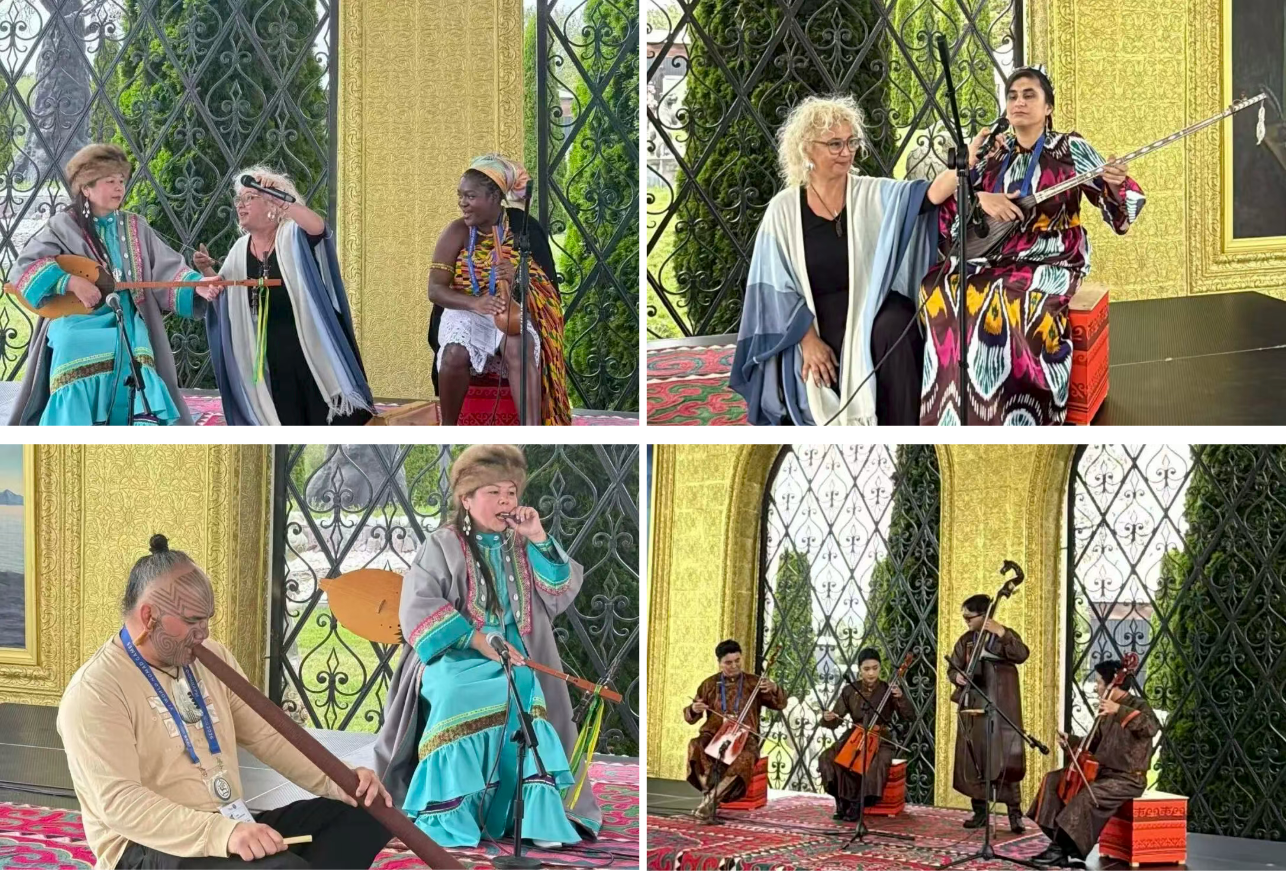
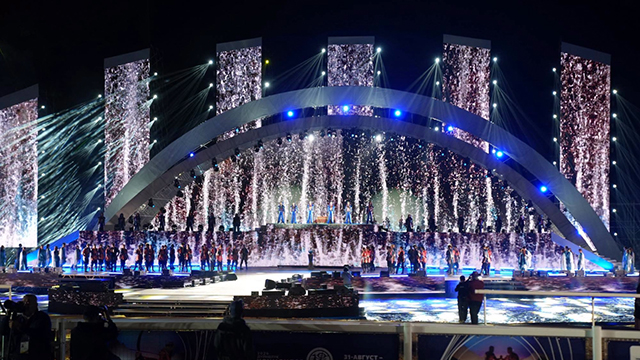
Artists from New Zealand, Kyrgyzstan, Argentina, Ghana, Azerbaijan, Inner Mongolia, and elsewhere performing at the music festival.
The most significant meaning of this conference lies in this: although cultural heritage originates from different lands, it faces a shared future. Preserving tradition is by no means sealing it in a vacuum, insulated from change; rather, it is about enabling it to remain alive in a changing world. Only by advancing with the times and maintaining living transmission can ancient wisdom be revitalized in the contemporary era, becoming an enduring force that connects the past and the future.
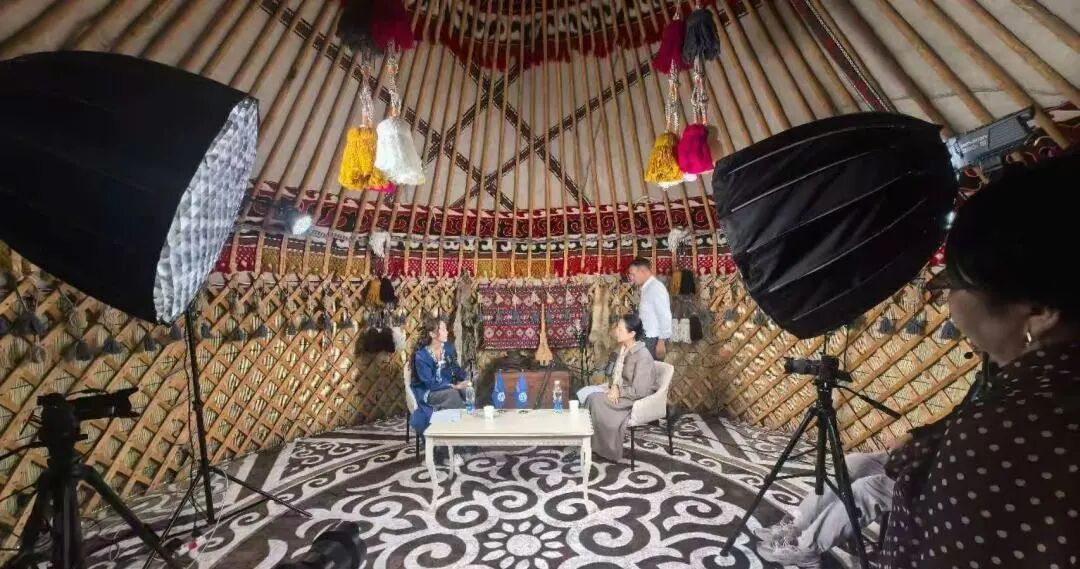
Interview with local media.
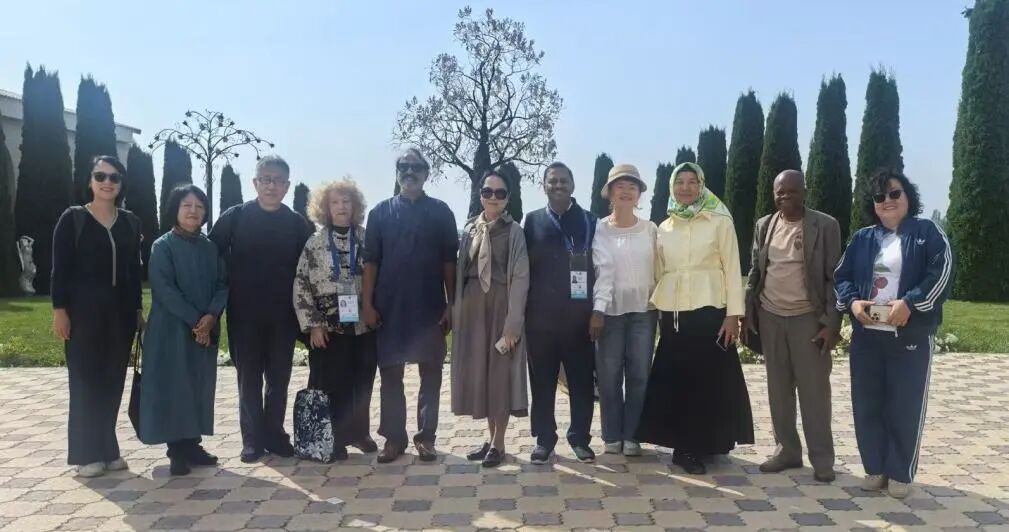
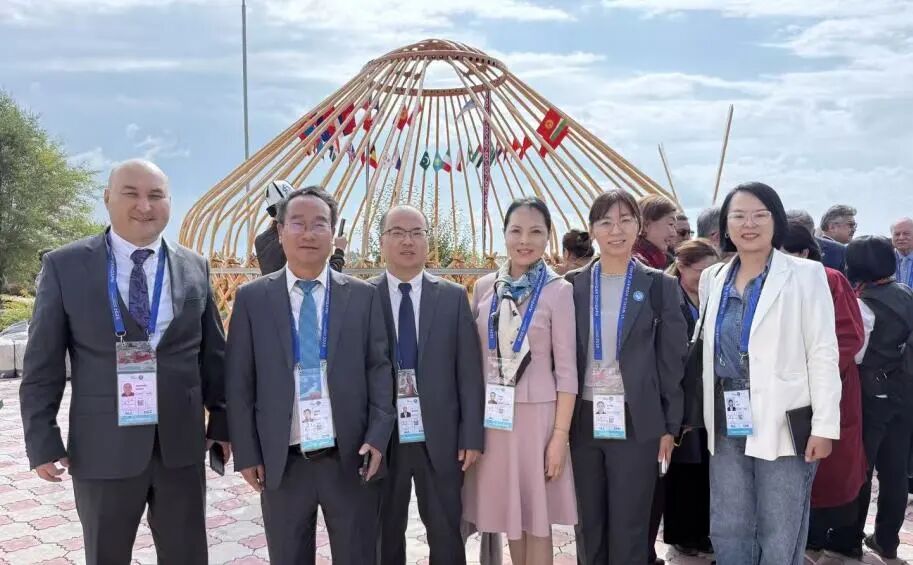
Group photo of some participants.
Images | Jinan University Text | Liu Lulu
Editor | Chen Min Reviewer | Chen Ping