
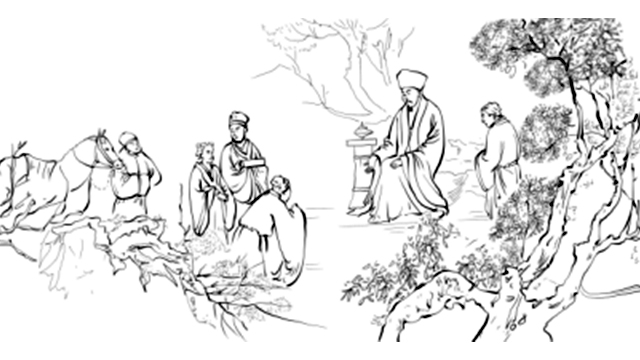
Confucianism is the core value of Chinese culture, and its ideas—such as "family and country first," loyalty to China, filial piety to parents, and kindness to others—have been deeply rooted in the hearts of the Chinese people for thousands of years. For the ancient Chinese people, patterns reflecting Confucian thoughts were their favorite decorations for traditional residences. These patterns show the core Confucian virtues: benevolence, righteousness, propriety, wisdom, trustworthiness, filial piety, fraternity, loyalty, integrity, shame, diligence, courage, respect, forgiveness, prudence, frugality, forbearance, friendship, kindness, and harmony. Many stories about Confucian sages, virtuous people, and their teachings in China’s history have become the best materials for these residence decorations.
For example, there are patterns about Confucius (551 BCE – 479 BCE) and his disciple Yan Hui (521 BCE – 481 BCE) cooking porridge together, Gao Chai (521 BCE – ?) respecting the elderly and caring for his family, Confucius asking farmers for directions, and the "Six Arts" explained in The Analects·Shu Er (a classic Confucian book). The "Six Arts" refer to six basic skills that Confucian scholars in ancient China needed to master: etiquette (including philosophy, politics, and moral education), music (music, dance, calligraphy, and painting), archery (military skills), charioteering (driving skills), calligraphy (literature and history), and mathematics (science and business). Other famous stories, such as Yang Shi (1053 CE – 1135 CE) standing in the snow to wait for his teacher, Li Dong (1093 CE – 1163 CE) fighting against the Jin Dynasty to defend China, and quotes from Zhu Xi’s Neo-Confucianism, are also common themes in residence decorations.
