
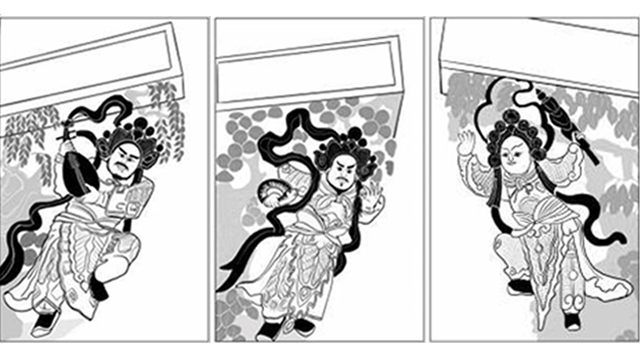
In the architectural tradition of Chinese folk dwellings, decorative patterns are not merely ornamental; they are a carrier of survival wisdom. They function as a bridge between the physical environment and the human psyche. Guided by a holistic view of the universe, ancient builders approached settlement design with an all-encompassing idealism. When confronted with spatial flaws—be it an improper orientation or a jagged mountain view—they did not resign themselves to fate. Instead, they activated a creative remedial mechanism. By arranging specific patterns in designated spaces, they utilized visual correction to achieve psychological balance.
This tradition, deeply rooted in Feng Shui (the art of placement), represents a profound pursuit of security. It evolved into a codified system where decorative patterns were used to "cure" architectural defects, ensuring the prosperity of the family and the clan.
