The warm breeze of early May, heralding the arrival of Lixia (the beginning of summer), still carries the lingering fragrance of late spring, stirring a quiet joy in the heart. As my eyes linger over these pages born of “Beautiful Dialogues,” my father’s face—so familiar from his gentle musings when he was alive—rises vividly in my memory. Those difficult personal experiences, those turbulent joys and sorrows of generations past, were stories my father carefully recounted again and again over a steaming cup of tea. In the life map he wove through decades of labor, there were both the hearty laughs echoing like the green forests of the Daba Mountains, and the silent sighs buried deep within the tunnels of the highway. The “complete voice” that Bakhtin once spoke of finds a genuine manifestation here—my father’s life gains renewed meaning in dialogue with me, and my own sense of self is rekindled in our conversations.
Dialogue is an everyday ritual for rebuilding emotional bonds with loved ones. The two initiators of Beautiful Dialogues hoped to use warm conversations as an iron, smoothing the creases of forgotten memories left in the wake of rapid urban and rural transformation. Encouragingly, more than a hundred interviewers from all corners of the country returned to their hometowns like migratory birds, warming the hearts of friends and relatives with the tenderness of their presence. They are not merely transcribers of ancestral lives, but individuals who, with wholehearted devotion, knock on the door of collective memory. Their emotional engagement has yielded a treasure trove of life stories that move us deeply. Thus, we are able to feel the calloused textures of Grandma Chunxiang’s 85-year-old hands, and listen to Grandpa Wanjian’s boat songs echoing across time and space. Through dynamic acts of dialogue, these private narratives intertwine to form a beautiful symphony of collective memory, resonating like a harmony of the earth within the ever-changing melodies of our era.
Dialogue is the elevation of life, the reconstruction of value. When Qixia holds tightly to her grandmother’s cracked palm, and Yujie retraces his father’s railway steps to re-measure time, dialogue transcends the ordinary and reveals the meaning of life. The 79 manuscripts and 174 hours of recorded sound are not a mechanical accumulation of data, but a vivid testament to stories of emotion and humanity. Within them, we glimpse what Heidegger called the “poetic dwelling” of the human spirit. Zhang Luyi retraces the migration paths of his ancestors; Xu Yuwei captures the solemn moment of her grandfather’s military salute. Whispers by the stove and the dust raised in the fields—all become part of a communal memory forged through personal dialogue.
Dialogue is an awakening of intellect, a bond of civilization. From Socrates' method of midwifery to Confucius’ way of transmitting wisdom without creating, humanity has always affirmed its intellectual heritage through dialogue. The survival philosophies forged in front of my grandfather’s steel furnace, the life aphorisms rising in the steam of my grandmother’s kitchen—all are now finding their place in an 800,000-character chronicle of rural lives. Yellowing ration coupons regain their value through conversation; faded genealogies sprout new life. This kind of dialogue is a generative, flourishing revelation of wisdom—an endless, unfolding epic of ordinary sages.
As the summer wind sweeps across the fields, may these seeds of dialogue scattered through mountains, rivers, and lakes grow with the warmth of memory against the chill of forgetting, and rise into great trees of life that stand in quiet vigil over our shared longing for home.
Yong Xiang
Co-initiator of Beautiful Dialogues: Oral Histories from the Countryside
Since the beginning of China's reform and opening-up, dramatic changes have taken place in the urban-rural structure. While rapid development has brought modern conveniences, it has also led, to some extent, to the silencing of rural voices, the forgetting of family lineages, and a sense of inner imbalance.
In October 2024, the Beautiful Dialogues: Oral Histories from the Countryside project launched an open call for participants. From hundreds of applicants, over 100 documenters were selected from nearly 28 provinces across China. During the 2025 Spring Festival, they returned from cities to their hometowns to recover family and rural memories through conversation—to reconnect with their elders and the land that raised them, and to contribute to rebuilding the ties and recollections of China’s rural society.
From December 2024 to January 2025, the project invited six sociologists and historians to deliver a series of six lectures, offering diverse perspectives to help participants build a framework for dialogue. These lectures included Professor Sun Qingzhong from China Agricultural University on "Rebuilding Emotional Ties with the Native Land," Professor Xiang Biao from the Max Planck Institute for Social Anthropology in Germany on "Proximity and Dialogue as Means of Shaping Life," Professor Yang Xiangyin from Renmin University of China on "The Power of Voice: The Social Value of Oral History," Professor Zhou Feizhou from Peking University on "Rural Families in the Process of Urban-Rural Integration," Professor Sha Yao from the Chinese Academy of Social Sciences on "Understanding Oral History: Research Questions and Methodological Approaches," and Professor Wang Ziqi from the Central Academy of Fine Arts on "Listening to the Way Home: A Guide to the Methods of Dialogue."
We also compiled and recommended 40 reference materials—including books, documentaries, and interviews—shared within our online community to foster a warm space for exchange and mutual support.
During the Spring Festival, over 100 documenters journeyed from the cities where they live back to the villages where they were born. They held the hands of their grandparents, followed in the footsteps of their parents, and quietly listened to long-buried stories amid the festive New Year atmosphere.
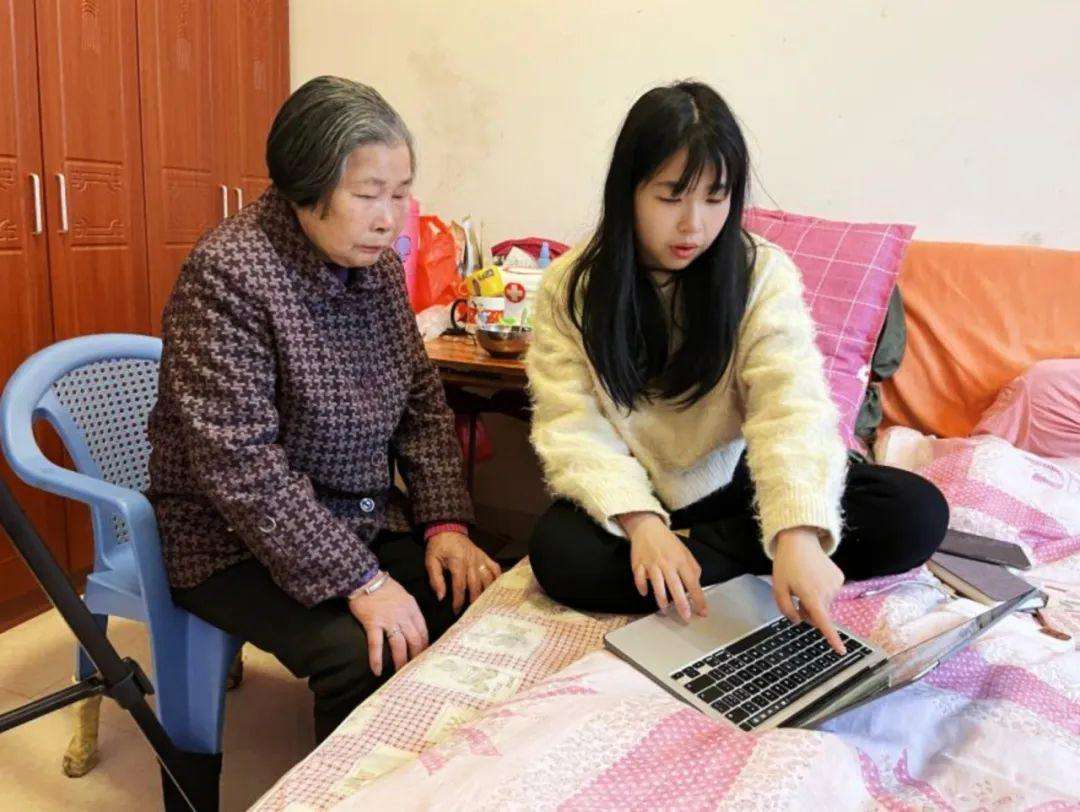
The person on the left is the interviewee, Chunxiang, who is 85 years old and is the grandmother of the writer, Qixia. The person on the right is the writer, Qixia.
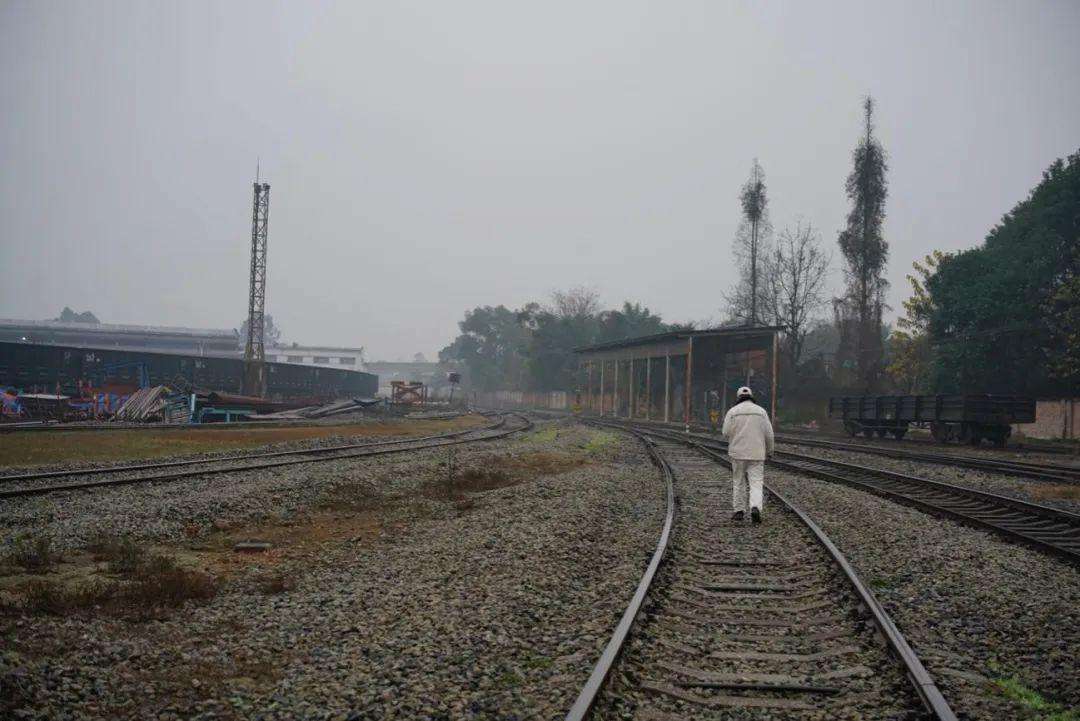
The back of the father as he walked back onto the railway tracks during the conversation. The interviewee is Yue Zhu, 56 years old, the father of the writer Yu Jie.
In March, as spring returned, we received 79 completed “beautiful dialogues” recorded during the holiday period. Together, they amassed 174 hours of conversation and over 810,000 words of transcripts, alongside audio, video, hand-drawn family trees, and other archival forms. Many documenters reflected that what they thought was familiar—their kin and hometowns—opened into an entirely new world, a world embedded in their bloodlines. In that world, they came to know the once-young lives of their elders.
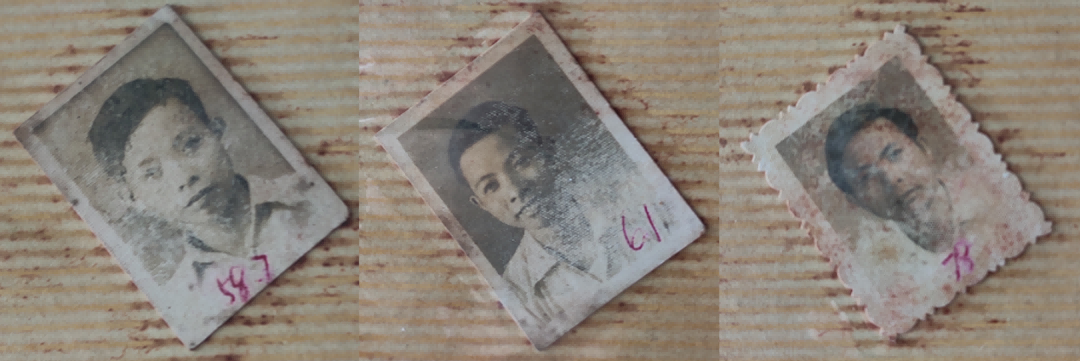
My grandfather graduated from primary school at the age of 15 in 1958 (left), graduated from junior high school at the age of 18 in 1961 (middle), and the photo when he started working at the age of 35 in 1978 (right). The interviewee is Cheng Wanjian, who is now 82 years old, and he is the grandfather of the writer Zhao Hongzheng.
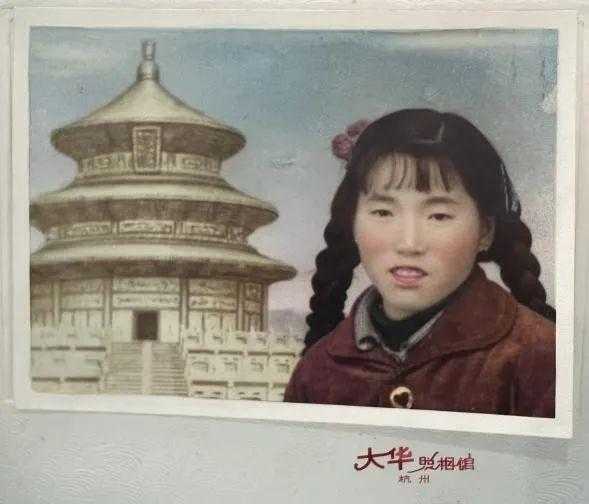
The photo was taken when the grandmother first met the grandfather at the age of 19. It was originally in black and white and was colored when she traveled to Hangzhou 30 years later. The interviewee is Zhou Cuiping, who is now 79 years old. The writer is Zhang Liuyi's grandmother.
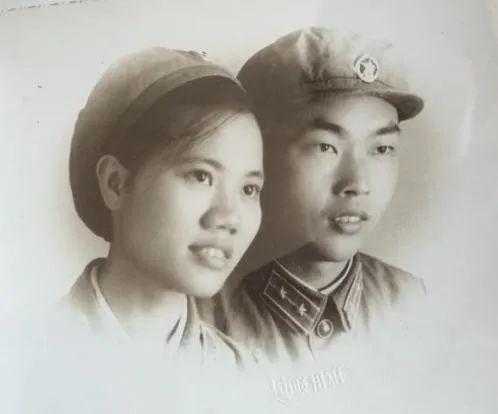
A group photo of my maternal grandparents when they were young. On the right is the interviewee Xu Linfeng, who is now 85 years old and the grandfather of the writer Xu Yuwei. On the left is Xu Yuwei's grandmother.
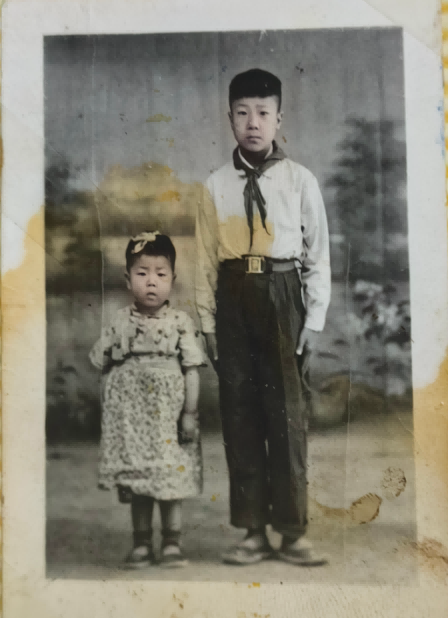
A childhood photo of mother and the third brother. The person on the far left is the interviewee Du Tong, who is now 53 years old, and she is the mother of the writer Lin Moyi.
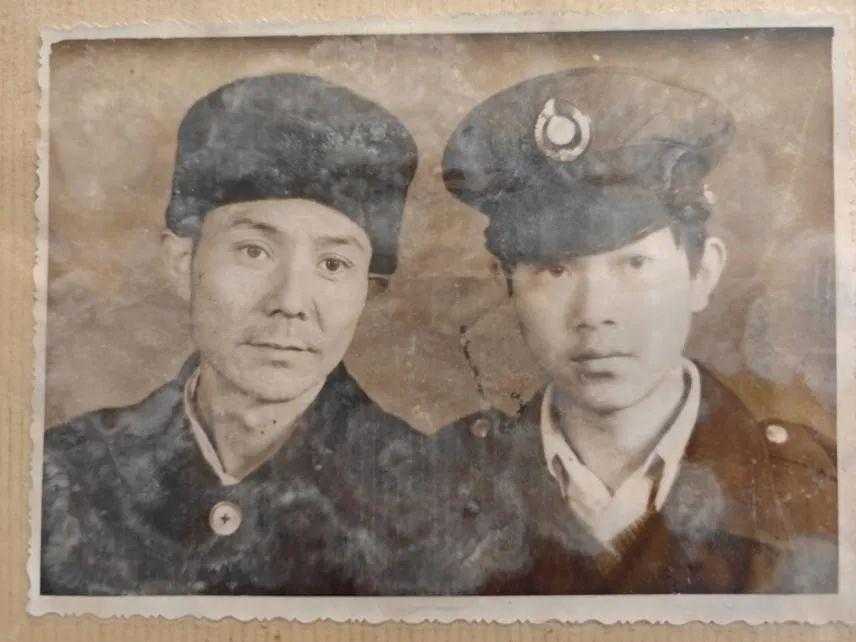
Grandpa took a photo with father who was wearing a full set of train driver's uniform. The person on the far right is the interviewee Yue Zhu, who is now 56 years old, and he is the father of the writer Yu Jie.
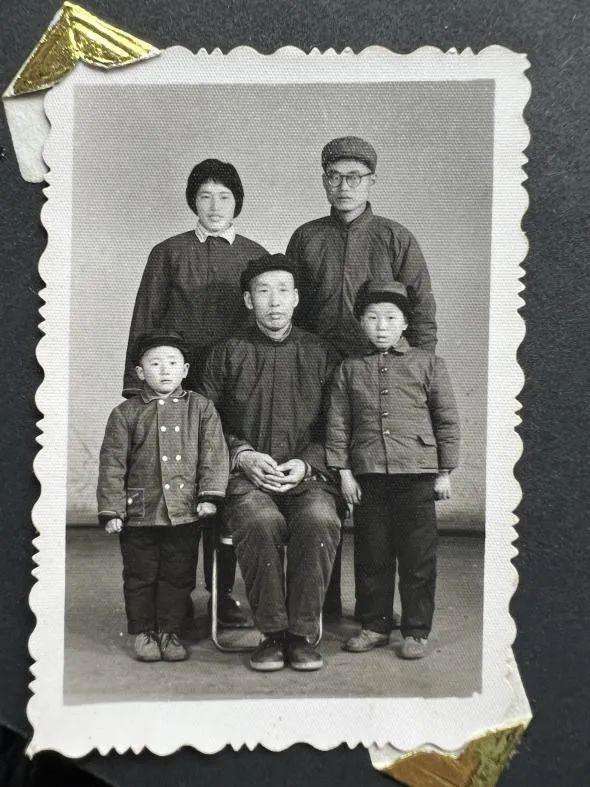
A photo of four members of the grandfather's family with the great-grandfather. In the upper right corner is the interviewee Zhang Huimin, who is now 84 years old and the grandfather of the writer Zhang Liuyi. In the upper left corner is the interviewee Zhou Cuiping, the grandmother of the writer Zhang Liuyi. In the lower left and lower right corners are the two children of Zhou Cuiping and Zhang Huimin at that time. In the middle is the great-grandfather of the writer Zhang Liuyi.
In April, as blossoms bloomed, the project team—with the voluntary help of 16 university students from the Central Academy of Fine Arts, Wuhan University, University of Macau, and the University of Chicago—sorted through 675.21GB of oral materials. Among the final submissions, the average age of documenters was 25.1, with the youngest being 16 and the oldest 53. Female participants accounted for 86.2% of the group. The majority were students (undergraduate, graduate, or doctoral), making up 73.0%. Most were born in rural areas but now live in urban environments.
The memories they collected span nearly a century, beginning in the 1930s, revealing the intricate folds of rural life. The average age of interviewees was 71, with the eldest being 93.
We heard previously obscured voices—figures once confined to the hearth and the fields now stood at the center of the historical record. Of the interviewees, 57.6% were women and 42.3% men. Occupational breakdowns included: workers/clerks (30.9%), farmers (29.6%), retirees (27.2%), self-employed/freelancers (8.6%), military personnel (7.4%), teachers (9.9%), homemakers (4.9%), medical staff (9.9%), grassroots workers/cadres (8.6%), and others (4.9%).(Some interviewees held multiple roles or changed professions over time, so percentages do not total 100%.)
Behind each oral narrative lies not only a personal journey but also the migratory history of families across generations. Only 20 submissions involved interviewees whose current residence matched their ancestral hometown—just 35.7%. The remaining 64.3% had experienced intergenerational migration. Among documenters, 65.3% had relocated across provinces from their hometowns. We observed that, across generations, most people have said farewell to the land of their roots.
Old keepsakes in ancestral homes gained new life through dialogue. A total of 35 documenters highlighted heirlooms referenced in their interviews, including but not limited to: 12 family genealogies, 20 old photographs, and 10 sets of memorabilia such as antique currency, ration coupons, cloth tickets, certificates, calendars, merit citations, an old harmonium, maps, government documents, and factory IDs. Examples include a class photo from Yan Chu Village Primary School (1985), a genealogical chest of the Ding family, an ID from the State-run 5413 Military Factory / Hebei No. 2 Machinery Plant, a 1953 banknote, a 1966 ration ticket, and photos of “model workers.” These treasures are no longer silent relics, but vibrant records brought back to life through storytelling.
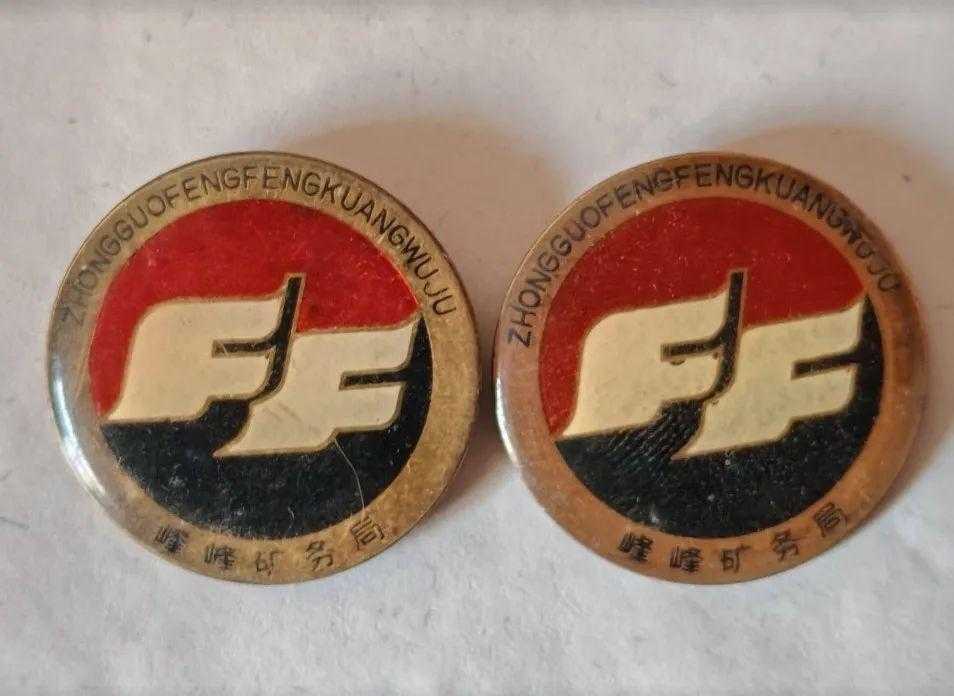
Wang Yuchao: The Coal Mine Workers' Union Badges of Two Generations, the Elder and the Father's Generation
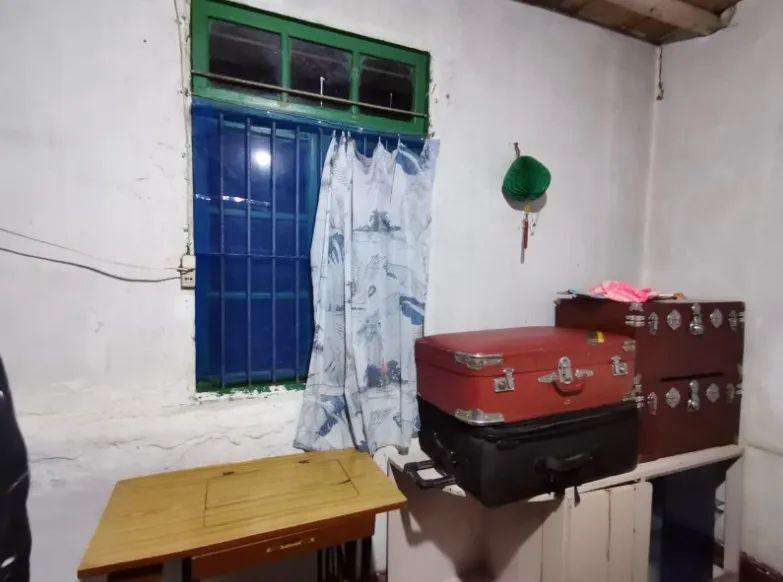
Ye Xiaoxia: Mother's Dowry
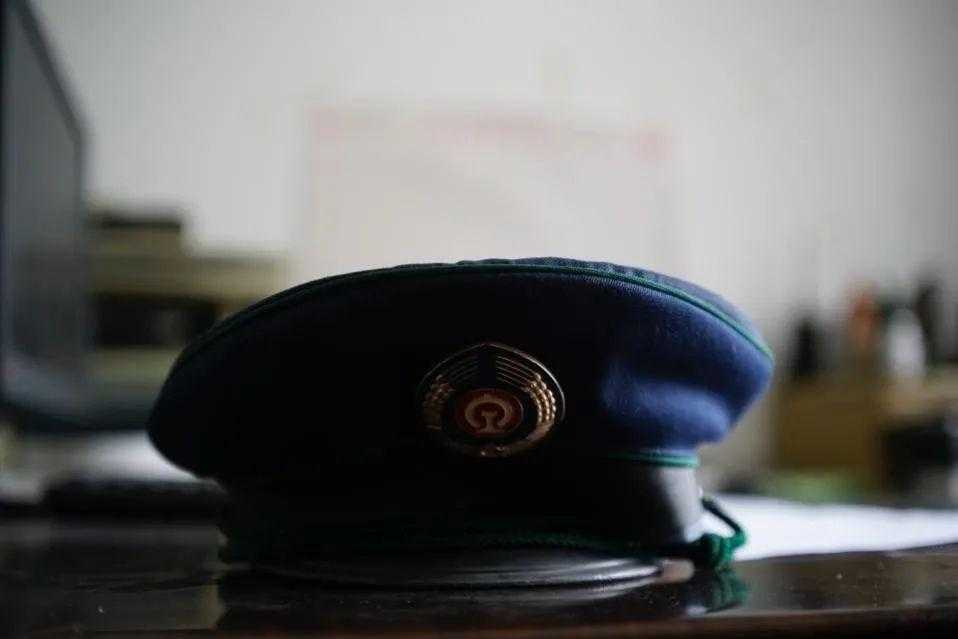
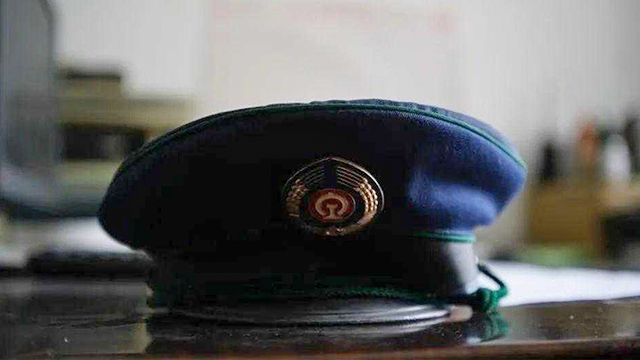
Yujie: The train driver's uniform hat that his father wore back then has come unsewn and cracked, and his father casually placed it on the lower layer of the iron cabinet.
In these heartfelt conversations, many expressed: “I understand you better now—and in doing so, rediscovered myself.” Across all valid submissions, 235 oral sessions were recorded—an average of 3.26 interviews per documenter. The highest count by an individual was 50 interviews. Total conversation time reached 174.31 hours, averaging 2.4 hours per interviewee. Altogether, the transcribed content amounts to 814,421 words.
On May 5th, the Beginning of Summer, when all life flourishes, our Beautiful Dialogues project begins to share these time-transcending whispers. May these once-folded family memories, life stories, and rural epics now enter a new journey of public conversation.
Finally, we offer our heartfelt gratitude to each and every one of you—the writers, the storytellers, and all of us who have wandered far, yet still find our way home.