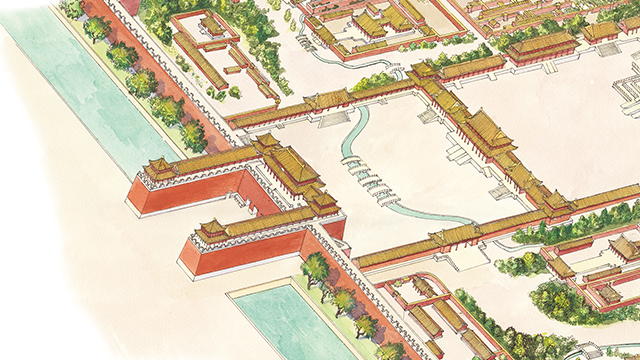
During the Cold War in the 1960s, through photography by spy satellites, the CIA spotted thousands of missile launching silos in Fujian on China's southeastern coast. It is the nearest province from Chinese Mainland to Taiwan Island. The "secret" was still unknown despite years of research. It was not until the 1980s that Professor Mako Ichiro from Tokyo University of the Arts led his students to investigate Fujian, China, and proved through mapping graph of local dwellings to the world that "missile launching silos" were actually earth buildings where residents in the west and southwest of Fujian had lived for generations.
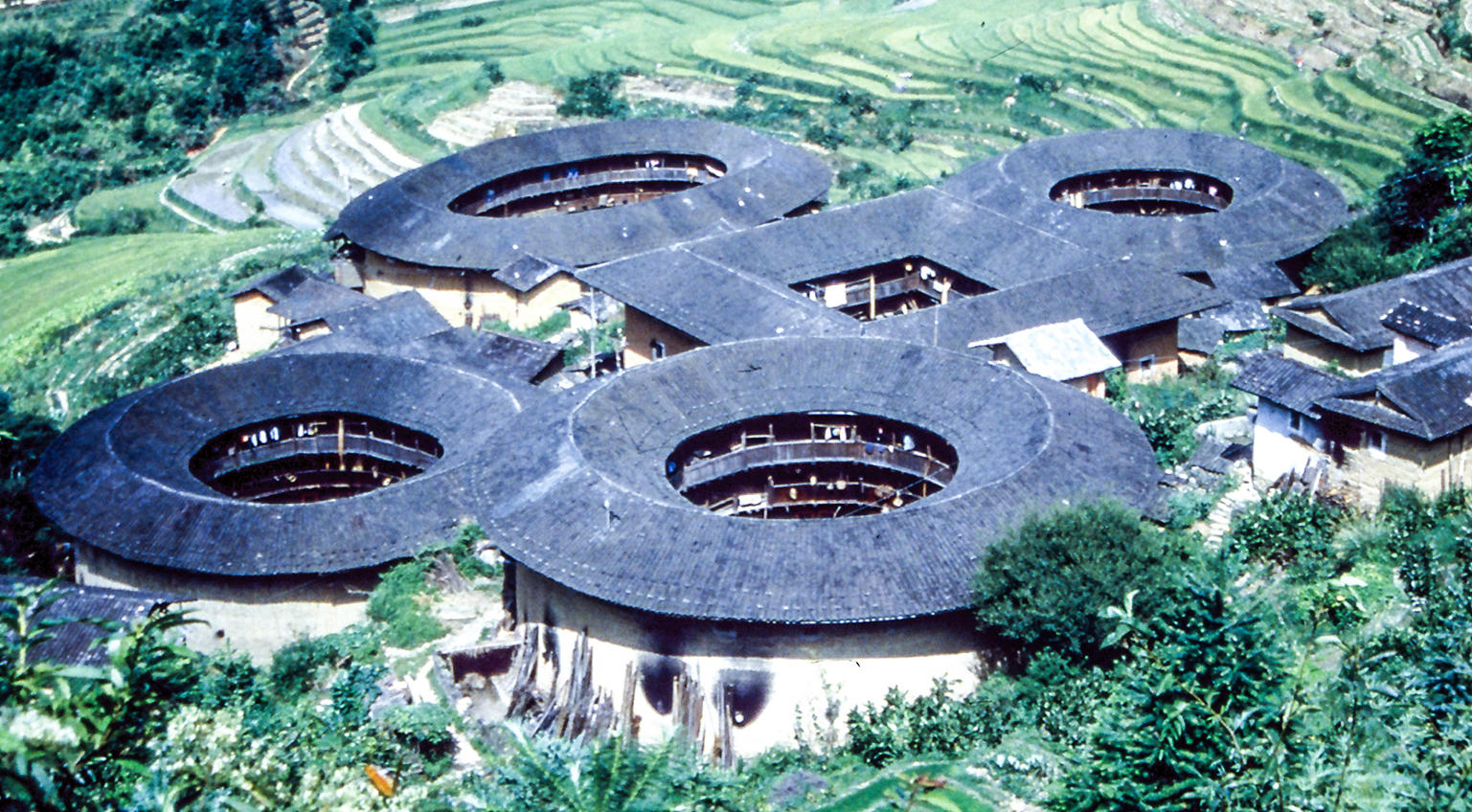
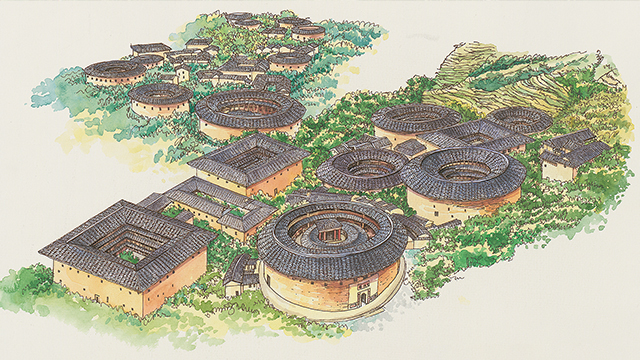
A group of earth building gathered in Tianluokeng Village. Among them, there are three circular buildings, one square building, and one elliptical building.
In 1990, Professor Mako Ichiro sent me a book about Chinese earth buildings published in Japan.
I first went to Fujian to investigate earth buildings in 1989. When I first saw the round earth buildings, I was completely shocked. This was almost like the Colosseum in ancient Rome. Earth buildings come in three main types: square tower, round tower and five-phoenix tower. The five-phoenix tower is a combination of large residential buildings, which is completely comparable to the imperial palace with its large scale and slope from back to front.
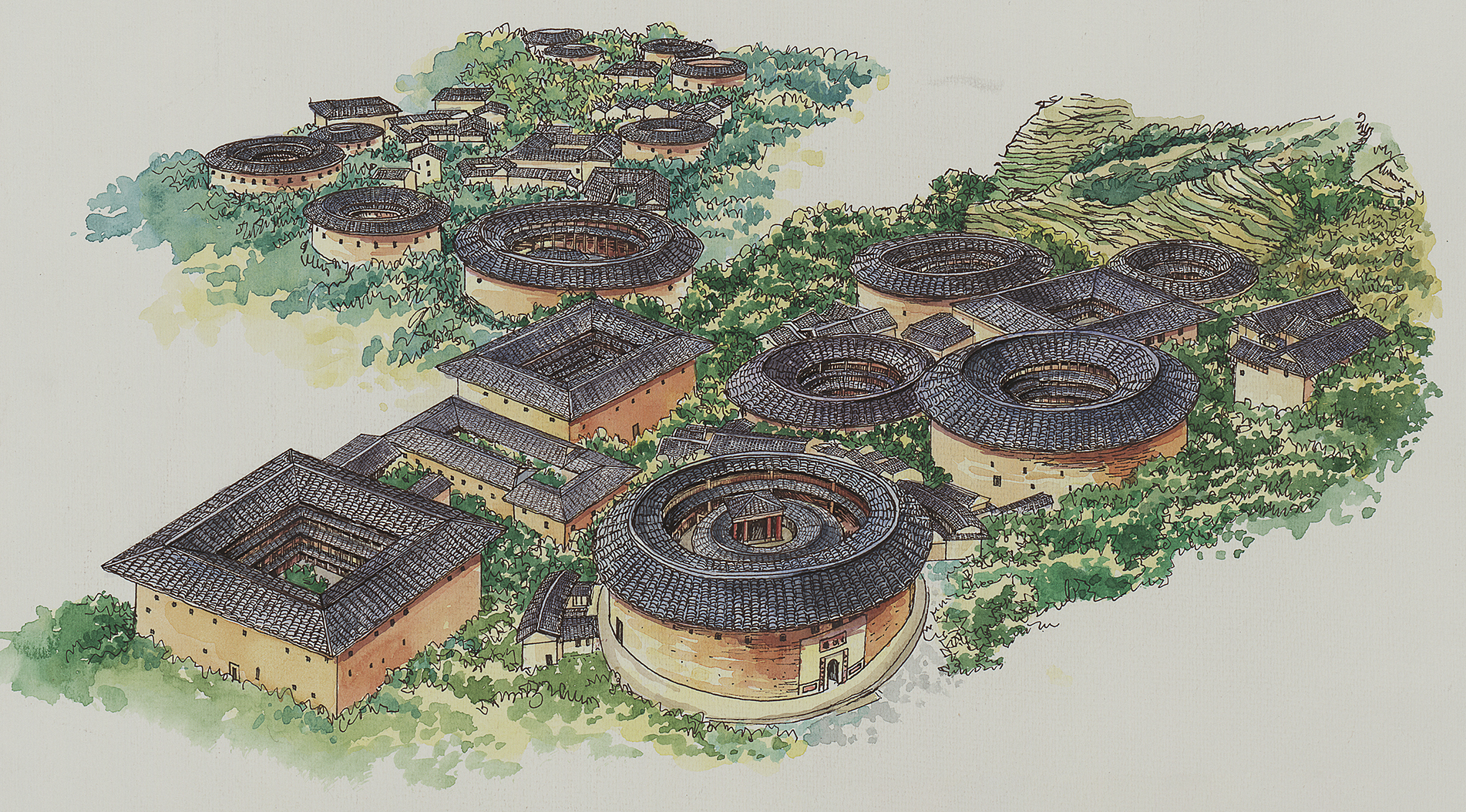
A group of earthen buildings in Yongding County, Fujian Province.
China is a highly hierarchical and centralized country. Why did people in southern Fujian dare to go beyond the restrictions and build big houses like palaces?
According to legend, a beautiful woman aged 16 from Yongding area of Fujian Province, entered the palace and was made a noble consort. The younger brother of the noble consort also went to live in the palace. After a long time, he decided to return to his hometown owing to homesickness. Considering his simple room and out of love for his sister, the emperor ordered the local officials to build a five-phoenix tower in accordance with the appearance of the palace.
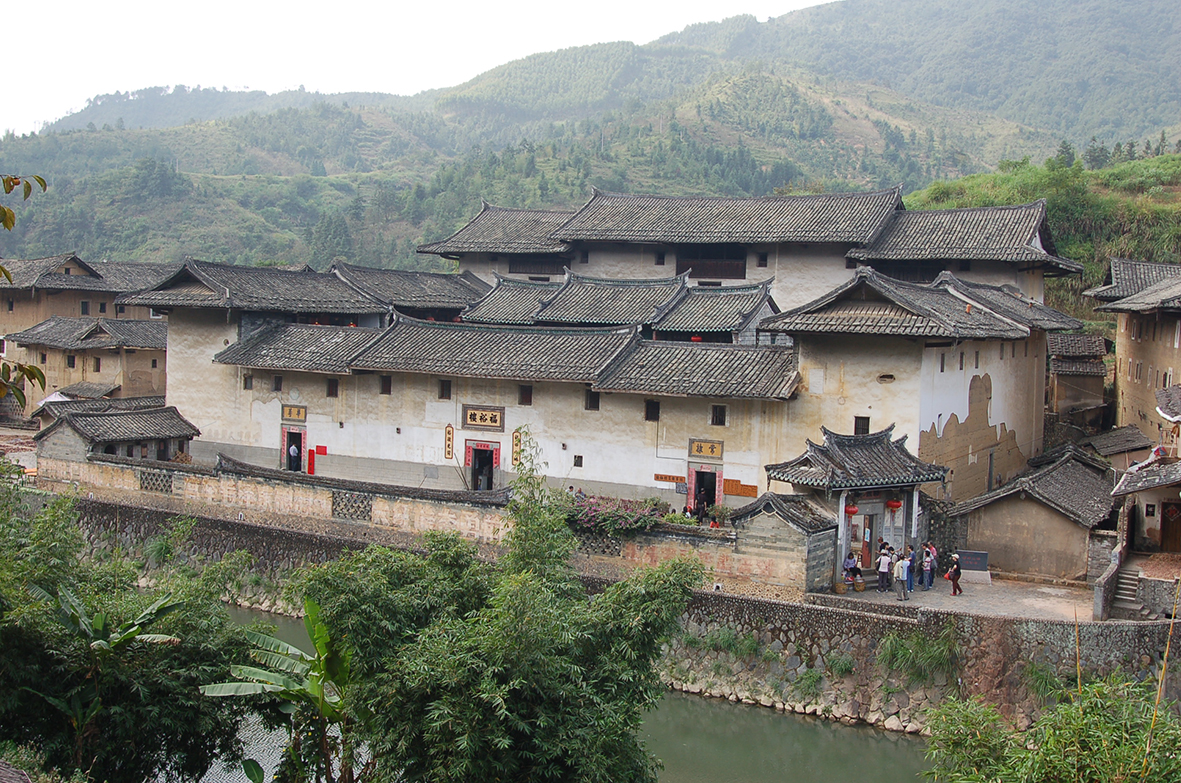
A square flat earth made building, Fuyu Building
Hakka people moved to the south from the north of China from 1700 years ago. All the way to the south, they fought for territory and living space with local aborigines wherever they went. After migration to the west and south of Fujian Province, they encountered a less favourable cultural environment and frequent harassment from the aborigines. Often they went out in the morning and couldn’t return in the evening. The Hakka people fought for territory with the aborigines, fought for mineral resources with the powerful nobles and local villains, fought against the burning, looting and raiding by bandits, and fought against the invasion of Japanese pirates. In addition, the clans and families fought for mountains and fields, and seized water and land transportation and commercial resources. Bloody incidents thus frequently occurred. People then began to build defensive residential buildings, and gathered together for common defence.
The five-phoenix tower imitated the fort building pattern of ancient scholar officials and eunuchs in the Central Plains of China according to the Hakka people’s memory. Though beautiful and imposing, it was not defensive enough. Hence, people gradually simplified the five-phoenix tower into a square earth building to greatly enhance the defence function. Earth building had a high construction cost, and many families also had living space allocation problems. There was a problem of fairness in who lives in the middle and who lives in the corner, so people invented the round earth building.
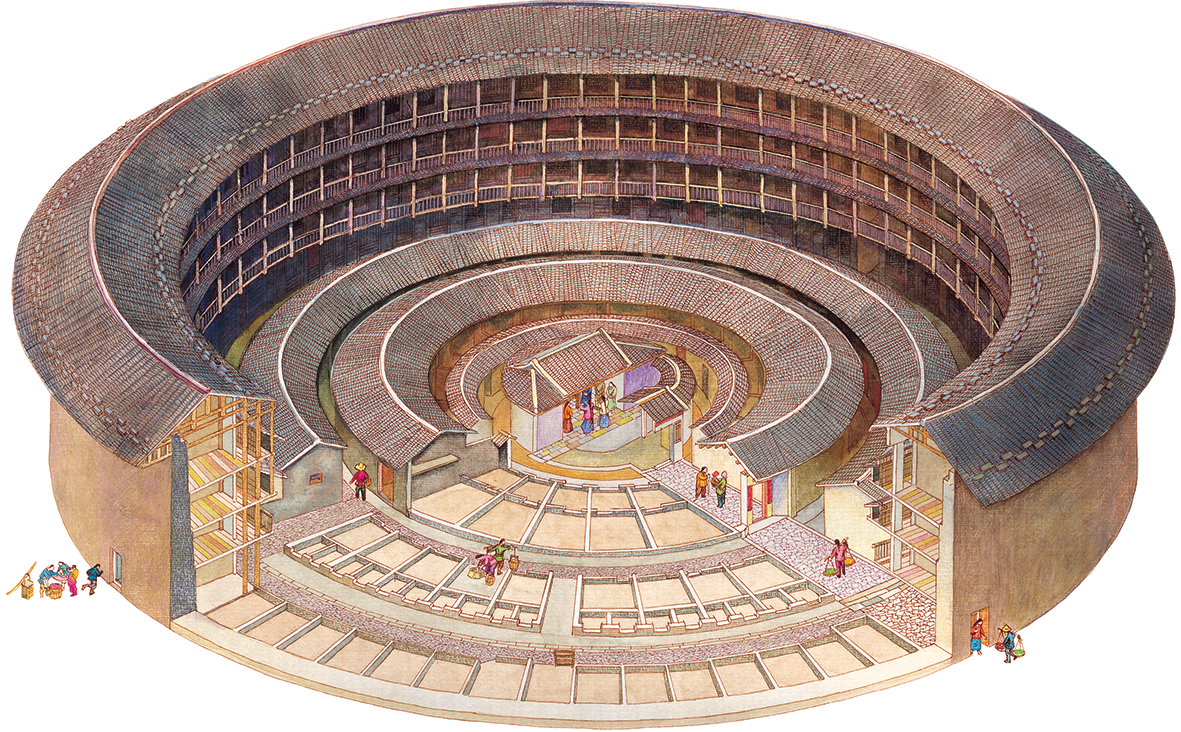
A sectional perspective view of Chengqi Building, which is four stories high and has four circles of buildings inside.
In terms of defence ability, from the perspective of defence vision, round earth building can better help prevent attack from incoming bandits than square earth building in resistance of external attacks.
Here, I want to introduce to you ERYI Building, one of my favorite round earth buildings with a diameter of more than 60 meters.
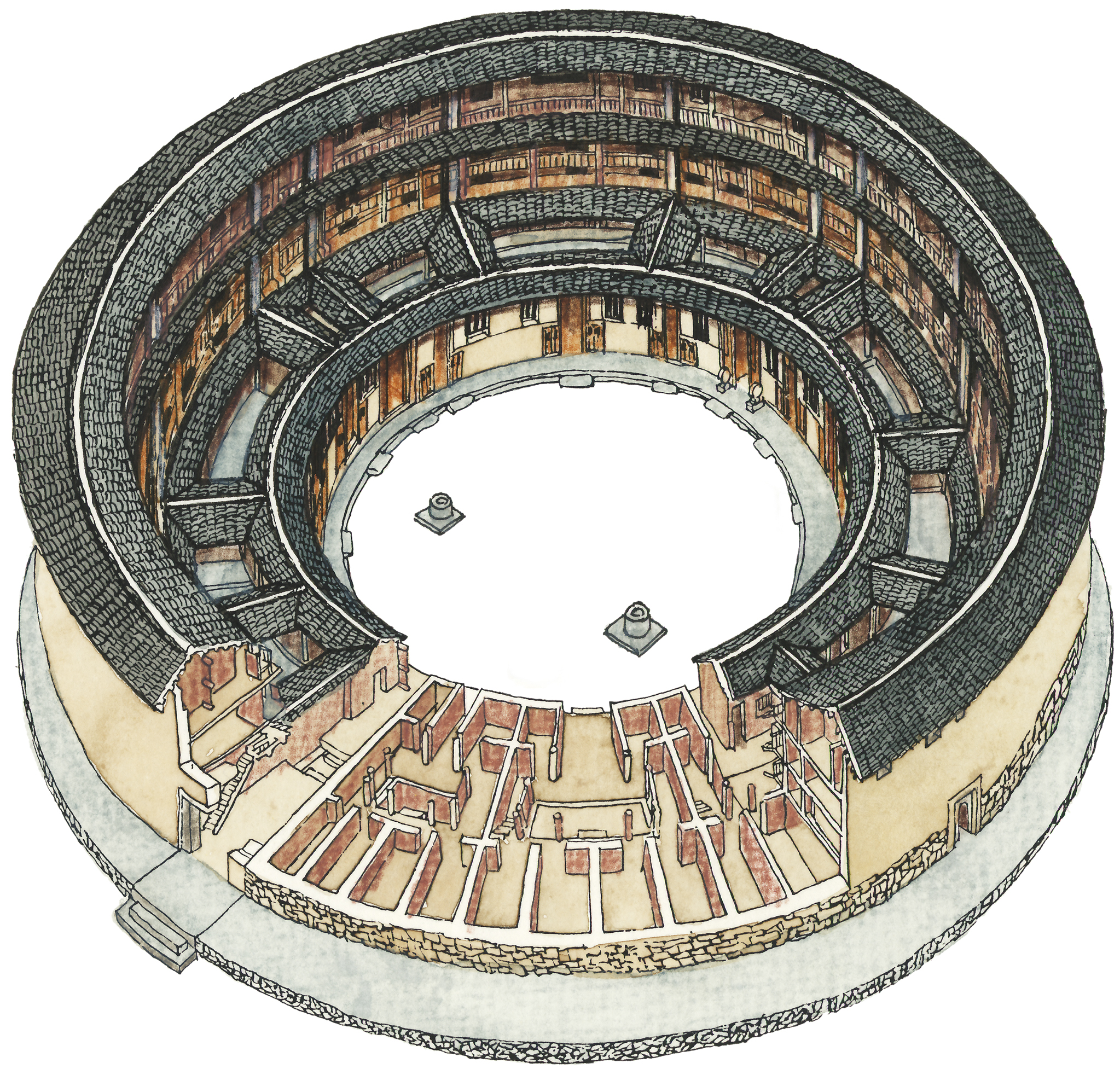
This is a sectional perspective view of a large earthen building with a diameter exceeding 60 meters.
Eryi Building in Dadi Township, Hua'an County, Fujian Province, is a one of the best typical round buildings, which is of four stories and two-meter-thick wall. There was no window on the first, second and third floors, but only a secret passage, speaking terminal, thick door and water injection hole in the wall of the doorway. There were many opening holes in the wall above the third floor, which enabled shooting at all corners below. At the back of the circle of rooms on the fourth floor, that is, against the outer wall, there was a hidden corridor, in which one could run about in safety, mobilize fire at random according to the circumstances of the war, and resist the attack of bandits from all sides. The topmost node was set up with convex guard tower, mainly used to attack bandits.
The earth building has a well dug in an appropriate location on the first floor, which can solve the problem of drinking water and fire prevention. Since there are no windows on the exterior wall of the second floor, grain storage warehouses are also set up here, which can generally provide for a year’s food. According to the time needed to resist the bandits, if reinforcements are needed, the people inside can escape from the secret way on the first floor to deliver a message or ask for reinforcements. If the enemy sets a fire outside of the gate, there is special waterproofing and a water tank above the gate, which can put out the fire.
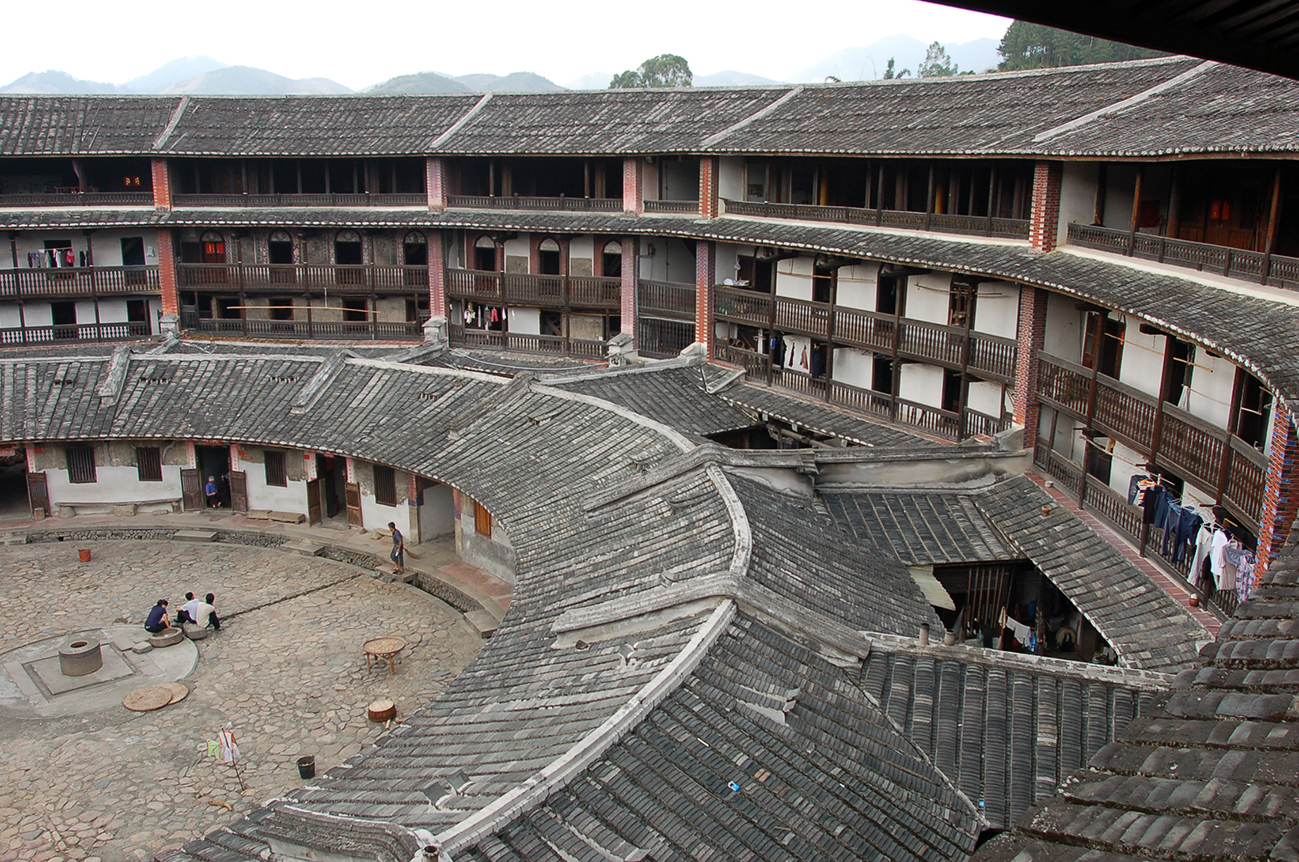
There are a total of 12 units in Eryi Building, each belonging to a household. Each household has a small courtyard on the ground floor, followed by a four story building. Each resident has 3-4 rooms on each floor.
At night, the gate is closed. Someone getting back late can go to the sound pick-up hole outside his home and inform his family of arrival. Sound enters the two-meter-thick wall through zigzag sound pick-up holes. The wall cannot be broken even with a sword or a gun.
After seeing these earth buildings, Mako Ichiro, a professor at Tokyo University of the Arts, exclaimed that they were just like flying saucers falling from the sky and mushrooms growing from the ground. On July 6, 2008, Fujian earth building was officially inscribed on the World Heritage List at the 32nd World Heritage Assembly in Quebec City, Canada.
Author Profile:
Wang Qijun, Professor at the Central Academy of Fine Arts in China, Art Historian, and Canadian Expert Invited to Work in China